The Forest Footprint of a Chocolate Bar from Côte d’Ivoire
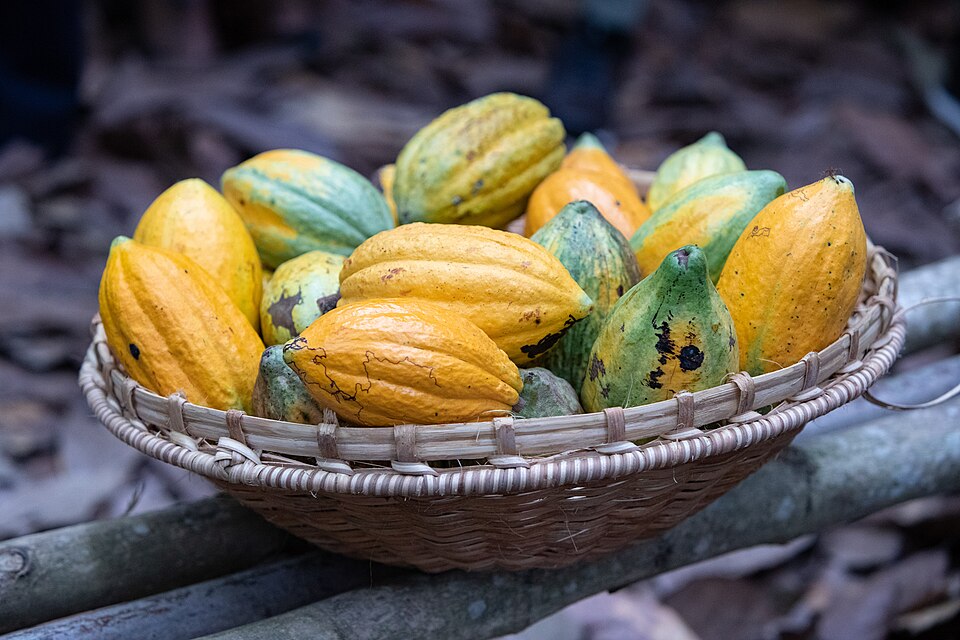
The humble chocolate bar has to be one of the world’s favourite treats; with a 5,000-year-strong history, it has previously taken the form of a currency, a luxurious drink and even as a medicine. Chocolate cultivation and production has evolved from when it was first domesticated in pre-Columbian America (circa 3300BC) to now, where most of our beloved cocoa comes from one country – Côte D’Ivoire.
The West African nation produced almost 2 million tonnes of cocoa beans in 2024 alone – alongside its neighbours Ghana, Nigeria and Togo, the region produces two-thirds of the world’s cocoa supply. Production of cocoa in West Africa, and especially Côte D’Ivoire, underpins rural livelihoods, according to María Victoría Díaz Lopez, who gave a fascinating talk on land-use change, emissions and the EUDR in relation to cocoa in Côte d’Ivoire at this year’s conference.
The Damage
Sadly, the sweet treat we know and love is also a significant contributor to deforestation, as Díaz Lopez’s study reveals. Cocoa production is now a leading driver of moist forest loss; forest cover in the West African nation has decresed by 80% since 1960. Farmers in the cocoa trade are expanding into protected areas, which contain freshly cleared soils that possess high natural fertility and thus high yields and productivity. The study implemented satellite imagery and estimations of above and below-ground biomass to estimate how cocoa cultivation has affected the local land, a consequence that Díaz Lopez expressed has “rarely been quantified accurately”. The findings included:
- 710, 781 hectares of Ivorian forest were lost between 2010-20
- 38.2% of this forest loss was converted directly into cocoa plantations
- The cocoa food system produced average emissions of 25.7 tCO₂e/ha/year between 2010 and 2020
- this alone accounts for 65.19% of Côte d’Ivoire’s total net GHG emissions
- Recorded emissions were highest in the west and south-central regions, with Haut-Sassandra and Cavally having the highest forest conversion rates
The Danger
“Europe is redrawing the rules of access to cocoa”.
– María Victoría Díaz Lopez
It is no secret that deforestation spells disaster for the natural environment on a local and international scale. As if the environmental damage was not enough, this rate of deforestation could be threatening the livelihoods that Ivorian farmers depend on. Over 6 million Ivorians depend either directly, or indirectly, on the cocoa sector, so any changes to the industry have considerable ramifications for the population. The majority of Ivorians that earn directly from the cocoa trade are smallholder farmers, meaning they have limited institutional backing or fallback options if their income gets cut off. It is evidently a very precarious and vulnerable industry.
The livelihoods of these farmers have recently been cast into doubt, with the development of the European Union’s new Deforestation Regulation (EUDR) legislation. The EUDR stipulates that products from exporter companies and countries sent to the EU market must be free of deforestation post-2020 in order to access the EU market. While this an overwhelmingly positive change in environmental terms, it is catastrophic in an economic sense for Ivorian smallholders. 70% of Côte d’Ivoire’s cocoa is exported to the EU, and due to limited technology and inability to trace the supply chains of most of the cocoa it produces, Côte d’Ivoire looks to be in danger of losing its most important partner. As Díaz Lopez exclaimed in her presentation, “Europe is redrawing the rules of access to cocoa. Farmers risk losing access to the EU market [because] EUDR turns deforestation into a market access problem”. It seems environmental protection and economic stability are struggling to coexist across not just Côte d’Ivoire, but other cocoa producing nations including Brazil and Indonesia.
The Diligence
Díaz Lopez stresses that the need to keep Côte d’Ivoire in the EU market, deforestation-free, is paramount for the economic security of its many cocoa farmers. The satellite mapping undertaken during her study will help identify areas of post-2020 deforestation, making it easier to see which areas are likely to be susceptible to EU exclusion. Traceability and support for farmers, that has been identified through the study, will focus on certain frontiers of production; something Díaz Lopez stresses will help protect forests, farmers and market access all together.