
Africa Needs Healthy Soils to Avoid a Food Security Crisis
Recent years have seen Africa simultaneously grapple with a growing population and a decline in soil health that threatens the continet’s food supply. Soil plays a crucial role in safeguarding a sustainble food supply to the growing African population.
Soil health is a broad concept, encapsulating soil fertility as well as chemical fertility and nutrient stocks. It spans the environmental, but also social and economic spheres, playing a decisive role in food security and livelihoods. At the same time, five United Nations agencies have expressed concern regarding growing hunger in the region, finding a worrying prevalence of undernourishment which is projected to get worse if urgent action is not taken. Ensuring the soil remains mineral-rich is a key answer to this pattern.
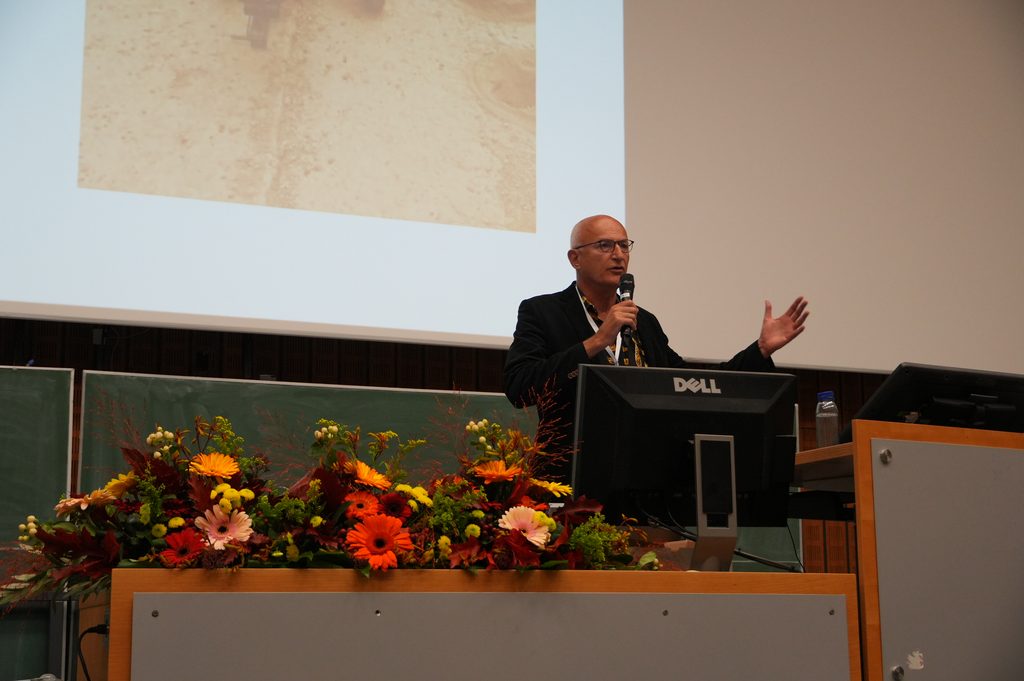
Dr. Eric Smaling, the first keynote speaker at Tropentag 2026, explored the depletion of essential minerals (phosphorous, nitrogen and potassium) in Sub-Saharan Africa, with nitrogen being the most scarce. Soils that cannot provide sufficient macronutrients cannot support healthy plants, causing a reduction in crop quality and yield.
Dr Smaling’s research found that the nutrients lost when crops are harvested are not adequately replenished by inputs, leaving the topsoil without the sufficient minerals to continue producing abundant croppage.
This has considerable impacts on many components of the growth cycle, including:
- crop yield stagnation
- scarcity of phosphorus, nitrogen and potassium
- declining topsoil, including carbon stocks
For a continent that is projected to be home to over 2.5 billion people by 2050, a reduction in soil health spells disaster. As population grows, maintaining balanced ecosystems becomes harder and increasing land degradation threatens nutrients stocks. Dr Smaling has pioneered an original solution to counter this, in the form of a customized management approach; relating soil fertility management more closely to its geography, using a combination of organic and mineral fertilisers to produce the greatest return on investment for African farmers. This requires managing the inputs and outputs of the nutrients in African soil, such as using site-specific fertilisers to address location-specific scarcity. This will increase uptake and ensure that the delicate balance is maintained, allowing the continent to continue feeding its growing population.
The people that will be responsible for this ongoing structural change will be producers, policy makers and those in the private sector; private investors should see agriculture in Africa as “a growth market” and ensure meaningful change can continue. Safeguarding soil health through channelled investment and resources will open up job opportunities for small-scale farmers in Africa to sell their fertilisiers to other businesses, expanding their income streams and improving soil health overall. Dr Smaling’s keynote speech and his recommendations serve as a sustainable network of solutions that can tackle this ecological issue head-on.