The “Food with No Status” That Could Help Feed Kenya’s Schoolchildren
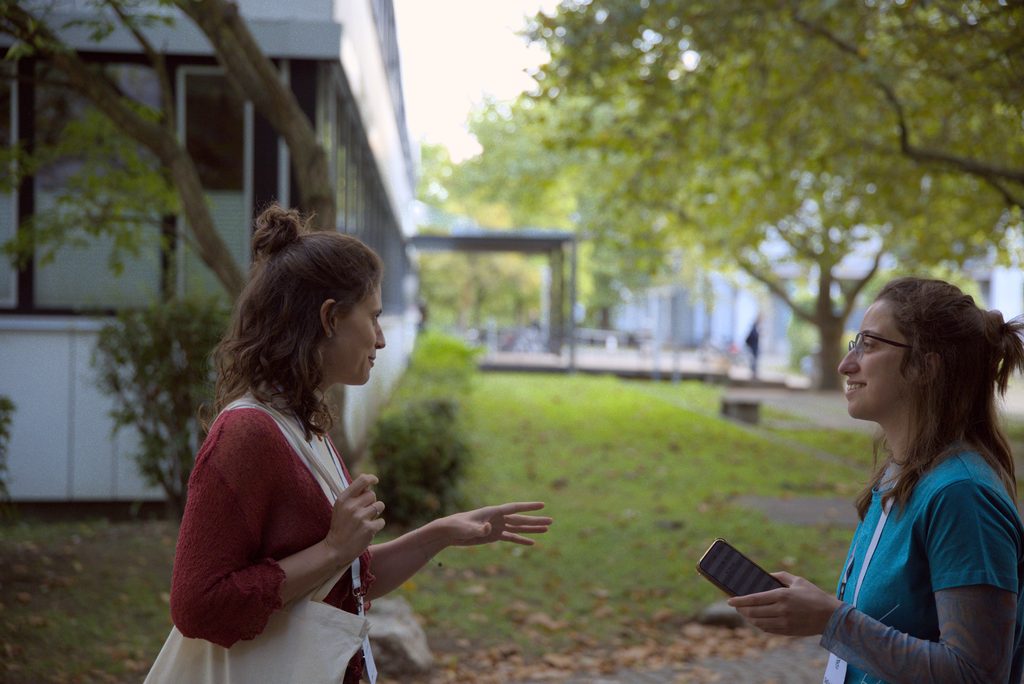
Martinez talked with the Student Reporters about her PhD research. Photo credits: Julius Nickl
Amaranth and cowpeas need little to grow, thrive in local conditions, and are packed with micronutrients. In Kenya, though, many people still consider them “food for the poor” or with “no status” because they were eaten during hard times or demonstrate a lack of money to buy “higher status” ingredients. Silvia Martinez, an Italian researcher who started her PhD in April, is studying whether school meals could help change this view by giving children better nutrition and making schools regular buyers of these crops.
From biology to ethnobotany
Martinez studied biology at the University of Pisa and earned a master’s degree in Nutrition and Health from Wageningen University. She became interested in ethnobotany as it brings together the fields of biology and nutrition. For her master’s thesis, she conducted her first fieldwork in Kenya in 2024, focusing on neglected and underutilised species (NUS).
Along the way, she got in touch with Dr. Céline Termote at the Alliance of Bioversity International and CIAT, and they stayed in contact because of their shared interests. When a doctoral scholarship opportunity came up, they began looking for a supervisor at a German university, since each scholar in the programme is supervised by both a German university and a CGIAR centre. When Martinez found prof. Gudrun Keding, all three were closely aligned, so they moved forward with the application and won the scholarship. Martinez is now a PhD student at Justus Liebig University Giessen, supervised by Keding, and an associated PhD researcher at the Alliance, where Termote supervises her work.
A malnutrition problem
Micronutrient deficiencies, often called “hidden hunger”, remain widespread in Kenya. The student mentions that a FAO survey 70% micronutrient deficiency for the Kenyan population. Poor dietary diversity is a big part of the problem: many people eat enough to fill up, but not a varied enough diet to get the vitamins and minerals they need. Children who miss out face a higher risk of developmental issues, and millions of them get meals at school every day. This makes school meals one of the best ways to improve what children eat.
Diets and farms now focus on just a few staple crops, making them more alike than before. Many traditional plants that once added variety and nutrients have been left out. Martinez wants to help bring some of these crops back.
The main challenge is social. Since people ate these foods when they had no other options, they are seen as low-status. Foods linked to higher status became more desirable, while healthy local crops were left for the poor. Serving these foods in schools could show they are good for all children, not just a last resort.
Why farmers need a market
For Martinez, the problem is not producing these crops but finding buyers for them. Without reliable markets, NUS are mostly grown on a very small scale, for home consumption or for sale at local markets. Farmers have little reason to grow more of crops that most people ignore.
That’s where school meals can make a difference: by purchasing these crops regularly, schools could establish themselves as a steady market, which would give farmers the confidence to grow NUS and thus help these crops become part of local food systems.
What her research will do
Martinez will not be introducing NUS in schools herself. Her PhD, Optimising Production Systems for the Introduction of Neglected and Underutilised Species in School Meal Programmes, centres on a landscape simulation model that explores what could happen if these crops were added to school meals: from children’s diets and farm productivity to labour, emissions and affordability. The model will be built with data from Western Kenya, including information gathered from farmers, parents, teachers and government officials. The aim is a tool that could help plan school meal procurement at landscape and subnational level.
The crops
These crops are a varied group, but they have three things in common: they are nutritious, often overlooked, and well-suited to local conditions, sometimes even growing wild. Amaranth, which came from Central America and now grows in Kenya, is full of micronutrients like iron. Cowpeas can be eaten as pods or leaves, so they count as two food groups, and they grow with little fertiliser. At home, people usually boil them or add them to stews, often mixing the two together.
Until now, her work with these crops has focused on households, not schools. Key questions remain: whether farmers could supply schools regularly, and whether children and communities will accept foods that have long been linked to scarcity. Although her research is still in its early stages, she hopes her work can help develop a powerful, innovative planning and decision-making tool that harnesses public procurement to promote healthier diets and more resilient landscapes.
This article was written by one of the Tropentag 2026 Student Reporters, Sofía De León Guedes