The Symbiotic Relationship Between The Cassava and the DRC
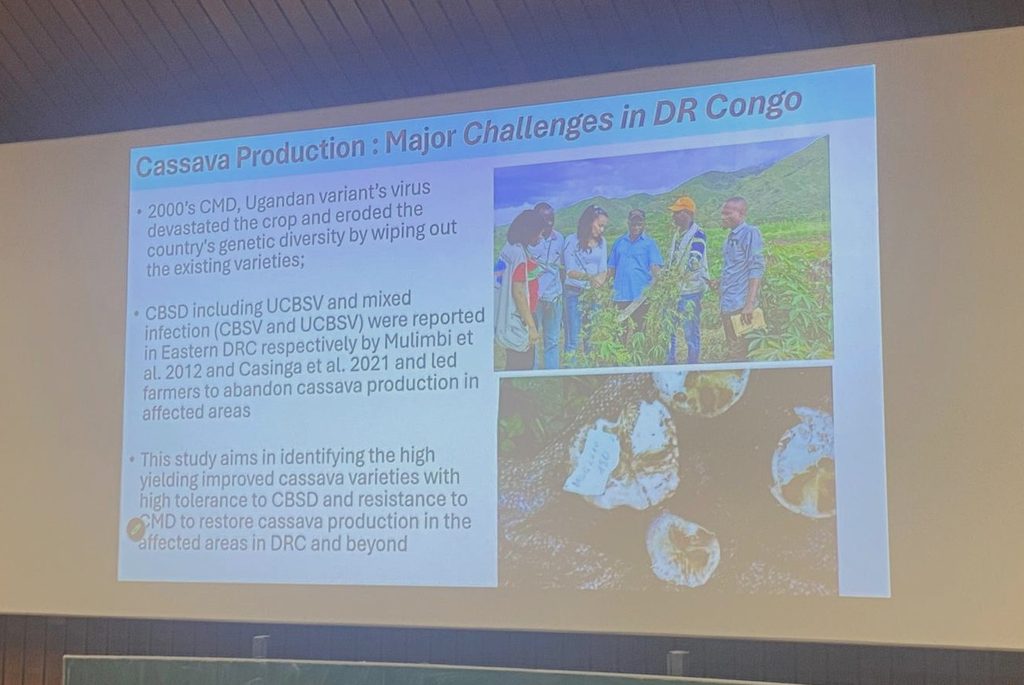
It is Day Two of Tropentag 2026 and we are deep into the afternoon presentations. I am watching the 2 o’clock session by Dr Mouritala Sikirou, about optimising screening against brown streak disease in the cassava, a food I realised I know nothing about.
Consider this a whistle-stop tour of the cassava, the Deomcratic Republic of Congo’s most important vegetable. It is one of the country’s principal crops, and the Congolese have the highest per capita consumption of it worldwide, at 353 kg per year! It is a staple food for over 112 million in the country, and the DRC is also the largest consumer of the plant’s leaves, locally known as “saka-saka” or “mpondu”, which are rich in proteins, calcium, and vitamins A and C.
As well as being a considerable source of nutrition and starch, it provides a livelihood to so many of the DRC’s farmers. Bernard Dihoulou is the United Nation’s World Food Program field monitor in the Bouenza region, one of the most popular places to grow the vegetable:
The cassava is particularly popular with farmers because of its versatility; it can grow in many different types of soil, survive droughts and be transformed into anything from cassava paste (the DRC national dish) to glue and bioenergy. The versatility of the cassava means it can be sold in many different sectors, allowing farmers to diversify their income to more profitable channels. Growing and selling it as a crop has allowed rural families to pay their medical fees, send their children to school and cater to their daily necessities, something invaluable to previously poverty-striken areas.
There is a significant threat to the crop, as Dr Mouritala Sikirou outlined in the presentation of his research. Cassava brown streak disease (CBSD) was named as the most severe threat to the fruit, particularly in Eastern DRC. It causes a the roots of the plant to rot and threatens up to 100% loss in yield, varying based on the susceptibility of the cassava varieties. Dr Sikirou’s study involved manually grafting scions onto trial plants, allowing them to screen larger volumes of infected cassava and eliminate them early before they can spread. This allows Congolese farmers to identify quickly which varities will fall susceptible, and prevent them from spending the entire harvest season growing only to fail. Importantly, the study identified CBSD-resistant varieties, DSC260 (a cassava clone) and two species of Manihot glaziovii that can be cross-bred with high-yield cassava, but more susceptible, varities to pass on CBSD resistance. This will allow the crop to build genetic resistance over time, and avoid mass yield losses for the farmers who depend on the cassava for their livelihoods.
Witnessing progress on tackling one of the region’s most formidable diseases was encouraging and the work that Dr Sikirou has done will help safeguard the Democratic Republic of Congo’s food security for years to come.