Healthier Food, Healthier Humans and Animals
The Federal Ministry of Agriculture, Food and Regional Identity (BMLEH) held a session to explore ways to strengthen resilience and health of humans, animals, and crops, starting by introducing BMLEH’s strategy for research collaboration.
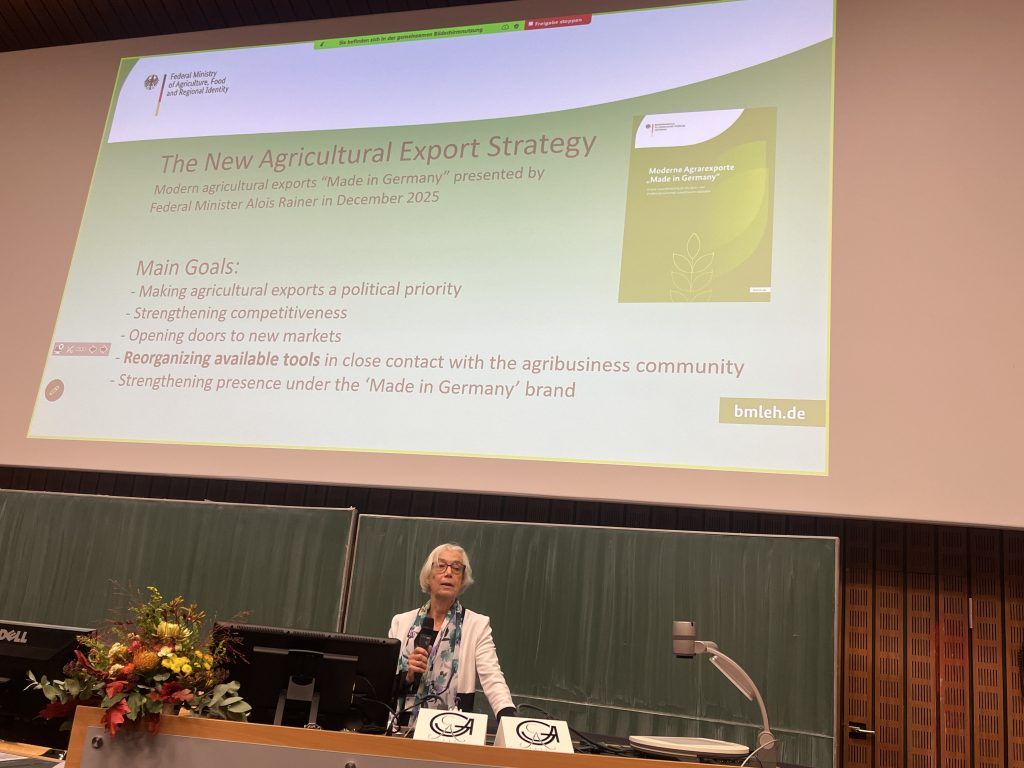
The main goals of BMLEH’s agricultural export strategy are to make agricultural exports a political priority; strengthen competitiveness, open doors to new markets, and reorganize available tools in close cooperation with the agribusiness community.
Bilateral cooperation is an important part of the programme, integrating agricultural policy and technical dialogues, cooperation between associations such as women’s and young farmers’ organisations, and connections for relevant business and trade sectors across the globe.
In particular, on-going food safety projects include working with Kazakhstan government to introduce general food safety legislation. Supporting the Moldovan Ministry of Agriculture in preparing for the adoption of EU legislation another important collaborative project.
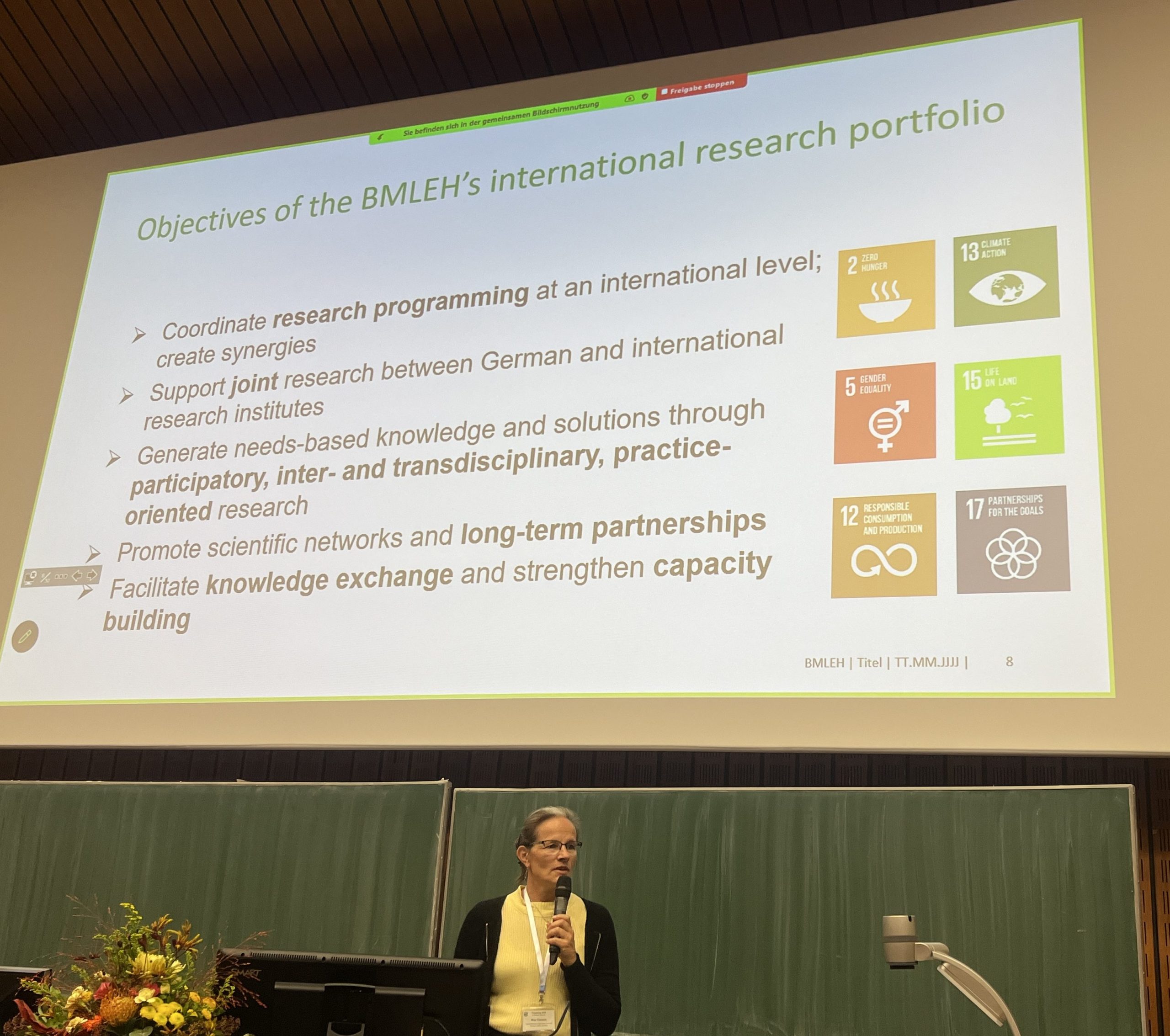
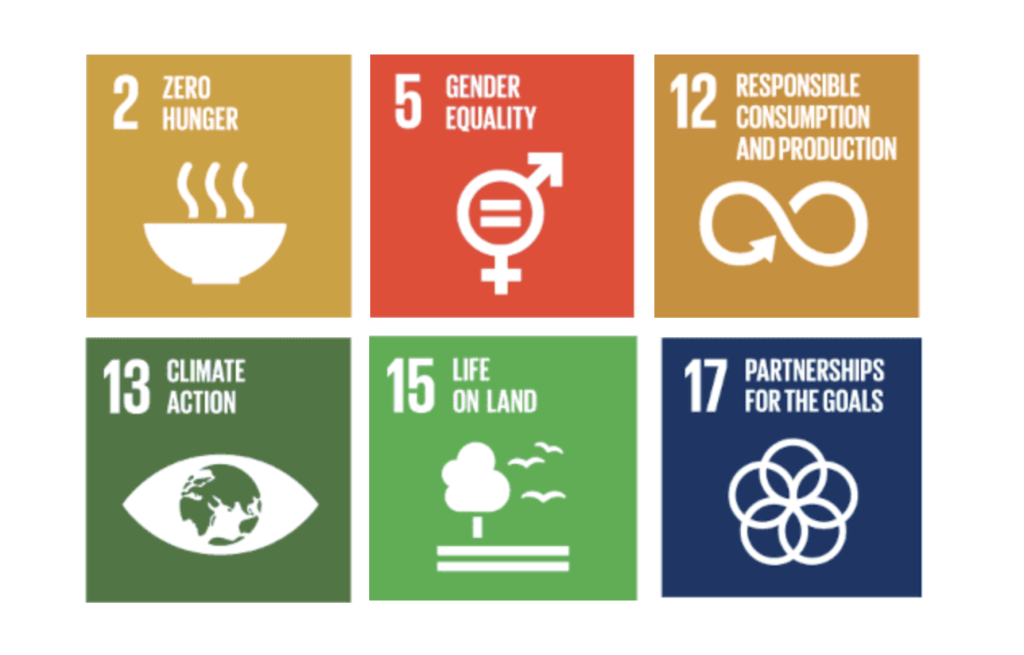
These projects are all interconnected and contribute to achieving the UN Sustainable Development Goals (SDGs); 2 Zero Hunger, 5 Gender Equality, 12 Responsible Consumption and Production, 13 Climate Action, 15 Life on Land, 17 Partnerships for the Goals.
One of the key objectives of the BMLEH’s international research programme is to generate needs-based knowledge and solutions through participatory, inter- and transdisciplinary, and practice-oriented research. It was also emphasised that facilitating knowledge exchange, rather than transferring, is an important aim alongside strengthening capacity building.
Research outcome: Sustainable production of maize
Katharina Neumeier from the Max Rubner-Institute introduced one of the research outcomes from this collaborative project. Her study focused on sustainable optimisation of local maize-based food systems and climate-resilient food production for smallholder farmers in Kenya.
The project consists of three components:
1. Improvement of soil and plant health as pre-harvest strategy
2. Bio-detoxification by aerobic fungal fermentation by feeding to insect larvae as post harvest strategy
3. Promotion of risk competence through knowledge transfer and capacity building, integrating sociological dissemination strategies, primarily for smallholder farmers.
As background of the study, aflatoxin B1 is a fungal secondary metabolite. Kenya provides an ideal environment for these pathogenic fungi to grow and spread, especially in maize.
Maize is an important source of consumption in Kenya and accounts for up to 30% of total daily calorie intake. It is also an important source of livestock feed. This means that farmers may use the contaminated maize not only for their own food but also as animal feed. Crop residue may also be ploughed back into the soil, potentially contributing to the whole cycle of contamination.
The study then used the aerobic fermentation method to detoxify maize, resulting in the development of a safe mycoprotein-based maize hybrid product.
Maize is a stable food in Kenay for both humans and animals. However, maize contaminated with aflatoxin B1 poses acute and chronic health risks for humans and animals. This research demonstrated a viable and sustainable option through an improved post-harvest strategy for maize production.