ATSAF: Connecting Researchers Beyond Tropentag
Tropentag is more than three days of presentations, posters and discussions. Behind the conference is a wider network of universities and organisations working to connect researchers, students, practitioners and development partners around tropical and subtropical agriculture, natural resource management and rural development. One of these is the Council for Tropical and Subtropical Agricultural Research (ATSAF), which is jointly involved in Tropentag and is working with the organisers of Tropentag 2026.
For many participants, these connections are one of the most valuable parts of the conference. A conversation over coffee can lead to a research collaboration, a new professional connection or simply the discovery of an opportunity that was not known before.
But how well does ATSAF connect with the next generation of researchers?
At Tropentag 2026, I spoke with ATSAF Youth Coordinator Joan Lombard, Administrative Support and Communications Officer Daniel Rozeik, and Chair Eike Luedeling about young researchers, the challenges of making ATSAF more visible, and how the organisation could develop its community further.
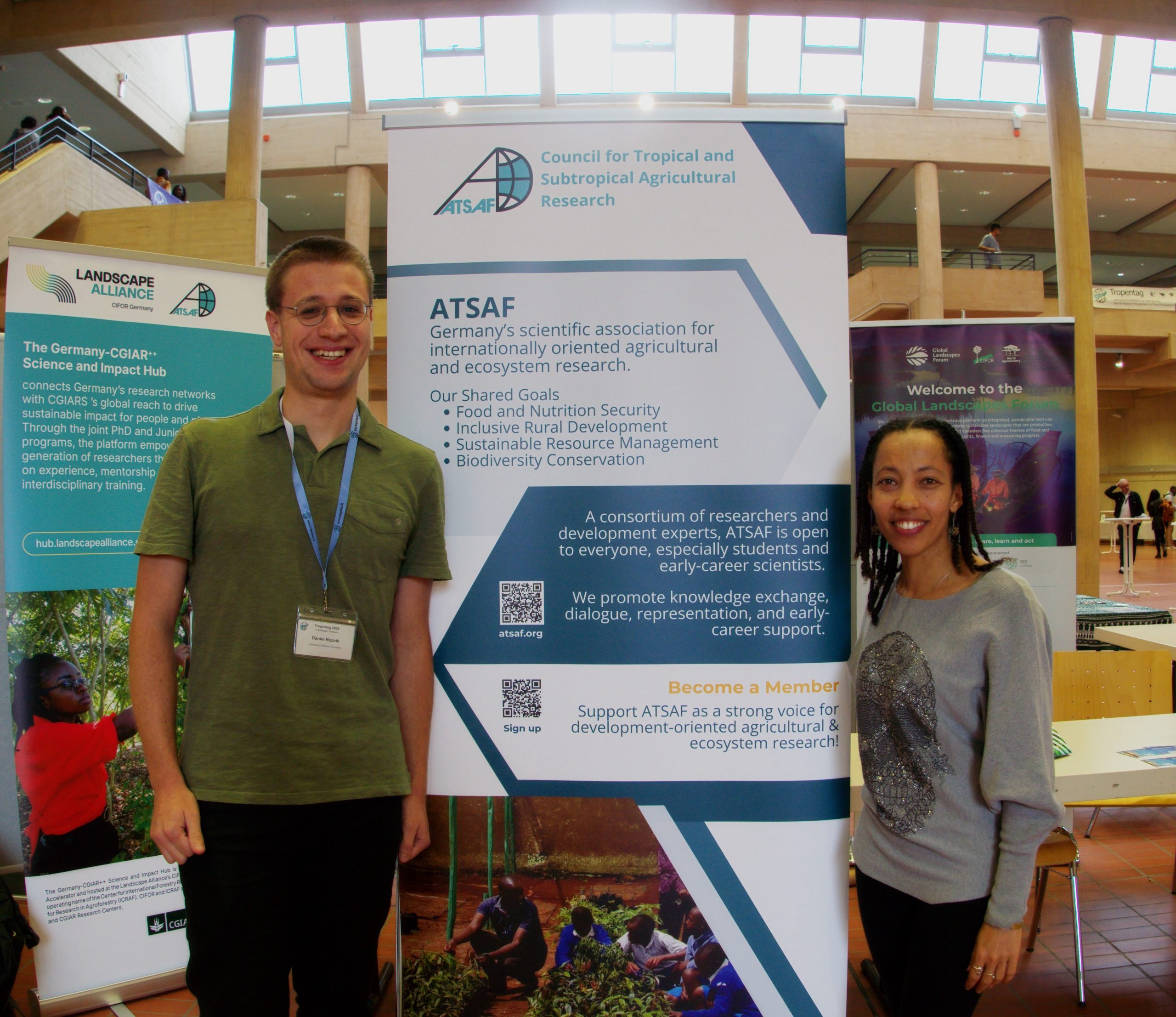
ATSAF Youth Coordinator Joan Lombard (right), Administrative Support and Communications Officer Daniel Rozeik (left) (Photo: Bricx Martillo Dumas)
Do young researchers know ATSAF?
For Joan Lombard, one of the first questions is quite simple: do young researchers know that ATSAF exists?
Speaking about a survey conducted among young people reached through ATSAF’s outreach, she described a clear information gap. Fewer than 5% of respondents in the survey were ATSAF members, while more than 90% reported that they were not members.
The numbers point to a challenge, but also to an opportunity. Many young researchers may simply not know what ATSAF offers, how to become involved, or what membership could mean for them.
According to Lombard, young researchers are particularly interested in opportunities such as mentorship, career development, PhD opportunities, platforms to present their research and networking with more experienced scientists.
This is especially relevant for students and early-career researchers working on agriculture, natural resources, food systems and rural development, who may already be working in areas closely connected to ATSAF’s community.
From information to connection
The challenge, however, may not be a lack of activities.
Lombard explained that ATSAF already has different programmes and opportunities, but information about them does not always reach the people who could benefit from them. The organisation is therefore looking at different ways of reaching young researchers, including electronic communication, social media and more direct engagement at universities.
For her, this is not simply about increasing membership numbers. It is also about helping young researchers understand where ATSAF fits into their academic and professional lives.
Tropentag itself provides an important opportunity for this. The conference brings together people from different career stages, institutions and countries, creating a setting where connections can happen naturally.
But the question is how to make those connections last beyond the conference.
Building bridges between generations
Daniel Rozeik sees one important role for ATSAF in connecting young researchers with more experienced scientists.
Agricultural research is increasingly international, and much of the research addressing challenges in the Global South is conducted in partnership with institutions and researchers there. Rozeik emphasised the importance of giving this research a wider audience and creating more sustainable partnerships with researchers and institutions in the Global South.
At the same time, ATSAF is considering how its own network could become more connected. Ideas include local chapters, international chapters and an online platform where researchers could present their work and find potential collaborators.
For young researchers, such a platform could provide a way to discover people working on similar topics, while also making their research more visible beyond their immediate university or research group.
These ideas are still part of a broader process of development within ATSAF. As Rozeik explained, the organisation is working on ways to make its members more active and to create channels through which younger researchers can contribute.
A changing community
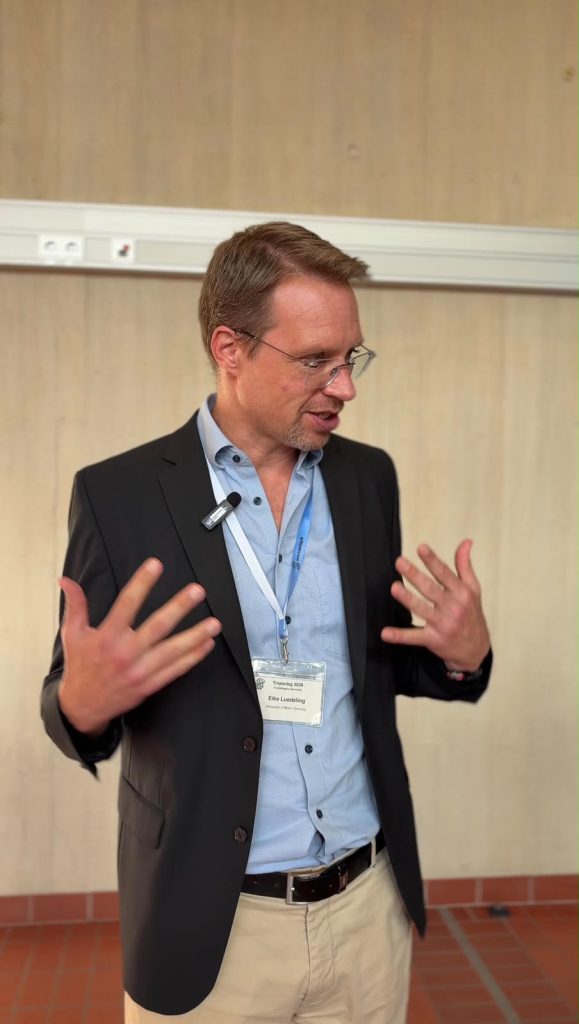
ATSAF Chair Prof. Dr. Eike Luedeling (Photo: Ali Merdzanic)
ATSAF is also going through a period of reinvention and renewal.
For Luedeling, involving younger researchers is an important part of that process. Rather than simply creating activities for young researchers, he sees potential for them to become active in shaping what the organisation does in the future.
When asked about ideas such as online workshops connecting students and researchers across countries, Luedeling pointed to the potential— but also to the need for people to take ownership of those ideas.
“Become a member, help us develop these ideas, and be the one to make them happen.”
His message reflects a broader view of membership: young researchers do not have to remain passive participants in an existing organisation. They can also help shape what that organisation becomes.
For ATSAF, this could mean creating more opportunities for members to interact, share their work and build collaborations across career stages and geographical boundaries.
From research to action
For Luedeling, however, networking should not be an end in itself.
He encouraged young researchers working in agriculture and development to think beyond academic publications and consider how research can contribute to real-world change.
Research, he argued, needs pathways through which knowledge can reach practice. That requires partners— including development organisations, implementation partners and institutions in the Global South.
And this is where conferences such as Tropentag can play an important role.
“We can’t achieve pretty much anything alone.”
For Luedeling, partnerships are therefore essential to moving research beyond academia. Tropentag provides a space where these partnerships can begin, bringing researchers together with organisations and institutions working on implementation and development.
The people one meets at a conference can therefore become more than contacts in a professional network. They can become research partners, collaborators and links to organisations working beyond academia.
Beyond the conference
Tropentag brings thousands of conversations into one place over just a few days. But the value of those conversations depends on what happens afterwards.
For ATSAF, the challenge is not only to introduce young researchers to the organisation, but to create meaningful ways for them to participate, share their work and connect with others.
For young researchers, the challenge may be equally simple: knowing where to look, who to talk to and how to turn a conference conversation into something that continues afterwards.
As Tropentag 2026 brings together researchers, students and practitioners from different parts of the world, ATSAF’s role raises a broader question for the research community:
How can the connections made at conferences become lasting partnerships that support research, learning and action beyond the conference itself?
Perhaps that is where the real value of a research network begins— not with a membership card, but with a connection that continues after everyone has gone home.