
Who wants to eat more vegetables?
Low vegetable consumption is a key indicator of poor diet quality in low, medium, and high income countries.
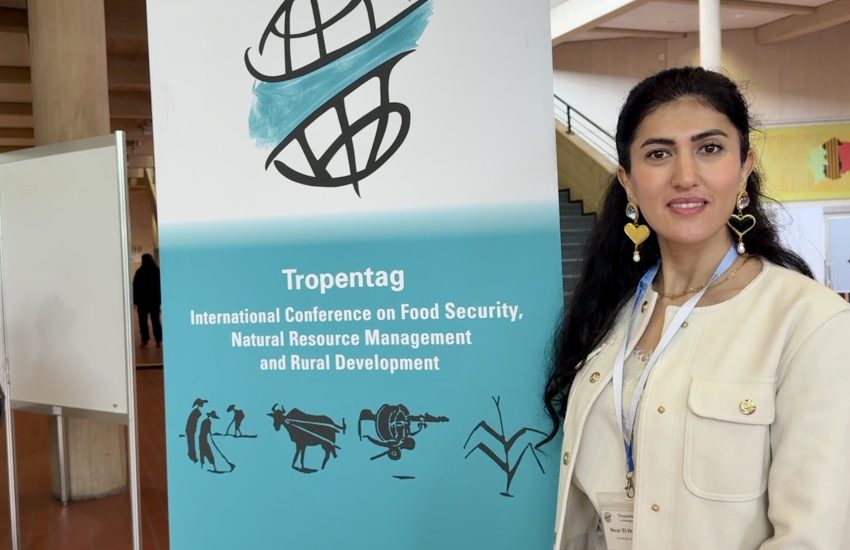
Elisa Langella (University of Bonn) presented her study into vegetable consumption from 846 households in Ghana during the Food Security and Nutrition thematic session of Tropentag Day 2. The main aim of the research was to understand if those who under-consume vegetables do actually want to change their diet and the food environment socio-economical and motivational factors that drive this. Providing evidence is vital for bridging gaps between research and policy change that can positively impact consumers diet patterns.
While vegetable consumption and dietary diversity are a central focus of nutrition initiatives, the relationship between desire to change behaviour and actual change is often unclear. Affordability and access are commonly cited barriers to better quality diets, however intention and the attainment gap require examination to inform policies that prioritise nutrition transformations.
Aspiration vs Consumption Gaps
The study employed seemingly unrelated regressions (SUR) and interaction and multinomial logit models to assess and identify key determinants of consumption and aspiration. Aspiration to consume more vegetables was found to be widespread, with 61% of respondents affirming their desire to incorporate more plant diversity into their diets. This result was an interesting indicator of behavioural interest, however only 37% of the respondents were found to actually consume vegetables.
Vegetable aspiration is not entirely deficit-driven and there is positive relationship between aspiration and aspiration. Most of the participants who wanted to eat more vegetables did. It was noted that consuming less may reflect resignation as a sign of “aspiration failure”.
Gender Dimensions
Gender and nutrition are inextricably connected. A limitation of the study was that it was not able to capture intra-household gender dynamics but Elisa acknowledged the importance of this dimension and identified it as a recommendation for a follow-up research.
Opportunities and Constraints
Those consuming insufficient vegetable quantities may be harder to reach for nutrition policy, as they were constrained materially and in motivation. Expenditure was found to be the only factor that could enable consumption regardless of aspiration status. But there is a definite need for multi-level complementary demand side policies that address material and motivation barriers.
A key takeaway from the session was understanding that aspiration is important for the nutrition transition in Ghana and lessons that can be scaled beyond within Sub-Saharan Africa. Promoting vegetable-related nutrition knowledge and positive health beliefs offers a particularly promising pathway for strengthening both consumption and aspiration.