Forests Can(‘t) Be Productive Without Sacrificing Biodiversity.
For millions of rural households around the world, forests are more than ecosystems. They are workplaces, sources of food and important foundations of livelihoods. Non-Timber Forest Products, from fruits and nuts to medicinal plants, play an important role for forest-dependent communities.
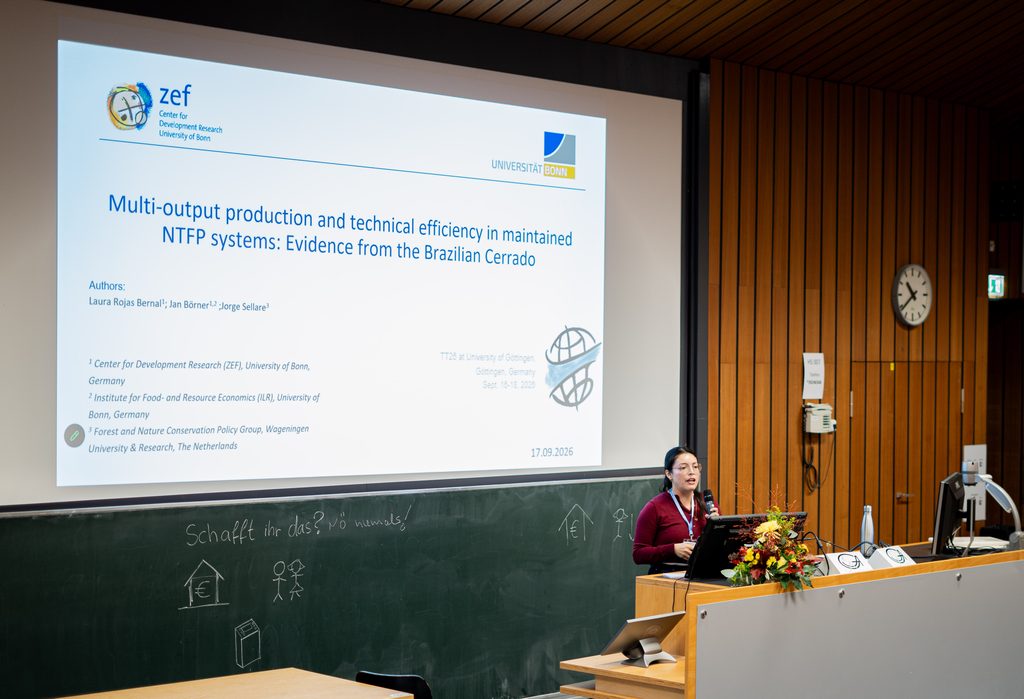
A study by Laura Rojas-Bernal, Jan Börner and Jorge Sellare explores this question in Brazil’s Cerrado, examining how smallholder farmers manage diverse Non-Timber Forest Product systems.
Diversity Can Work
Using data from 173 smallholder farmers, the researchers examined how efficiently farmers turn their available resources into multiple NTFP outputs. One of the most interesting findings was that greater NTFP diversity was associated with lower technical inefficiency.
In other words, producing a wider variety of forest products did not necessarily mean sacrificing productivity. Diversification may actually help farmers use their production systems more effectively while maintaining biodiversity.
The study also found that labour was the main limiting input. Rather than simply expanding the amount of land used, improving how labour is organised and utilised could provide greater opportunities for productivity gains. With an average technical efficiency of around 0.24, there appears to be considerable room to increase output using existing resources. However, decreasing returns to scale suggest that simply making production larger is not a straightforward solution.
A Different Path For Rural Development
The findings also show that sustainable management practices can shift NTFP production from a more land-extensive model towards a more labour-intensive one. This has important implications for agricultural extension programmes and environmental policies. Instead of encouraging farmers to specialise in fewer products or expand their land use, support could focus on helping them manage diverse production systems more efficiently.
The experience of the Brazilian Cerrado offers a broader lesson: biodiversity does not always have to compete with efficiency.