Cash is Not Just Cash: How the Way Money Arrives Shapes Climate-Smart Agriculture
What if how money reaches farmers matters as much as how much they get? Research from Tropentag 2026 suggests that the delivery channel can change what farmers do next.
For years, the answer to slow adoption of climate-smart agriculture has sounded deceptively simple: farmers need more money to invest. The logic is hard to argue with. New agricultural practices and technologies require initial capital, which many smallholder farmers may not be able to afford. So the common thinking is that transferring cash would ideally lead to climate-smart adoption.
But what if cash is not neutral? What if the route that cash takes could change its outcomes?
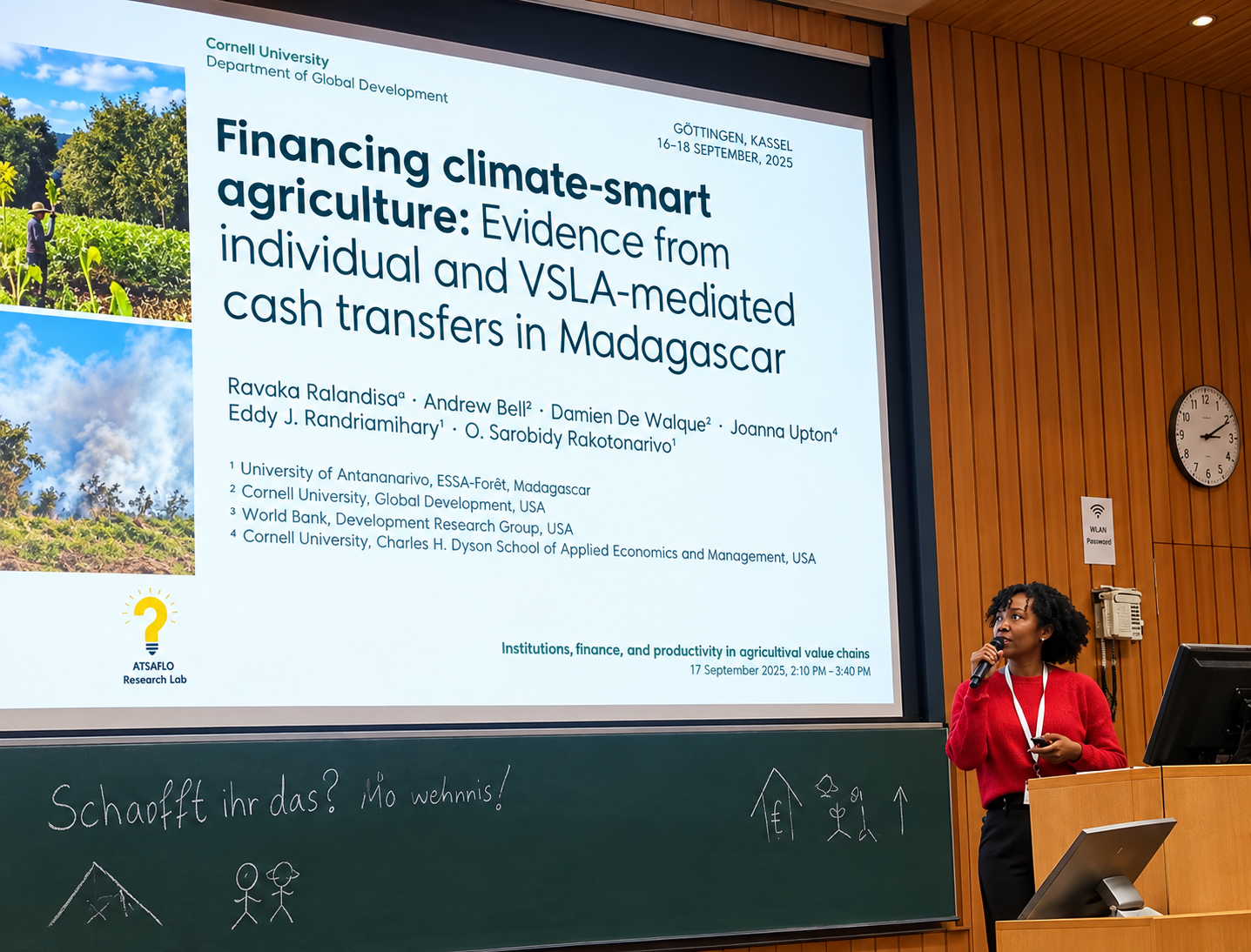
That is the central question asked by Ravaka Ralandisoa, a PhD researcher at the University of Antananarivo during the 2026 Tropentag conference in Göttingen. Her study titled “Financing climate-smart agriculture: Evidence from individual and VSLA-mediated cash transfers in Madagascar” compares two different routes for delivering financial support: direct transfer to individual farmers and transfers channelled through Village Savings and Loan Associations (VSLAs).
Ravaka argues: “The way we transfer cash should be part of the intervention itself.”
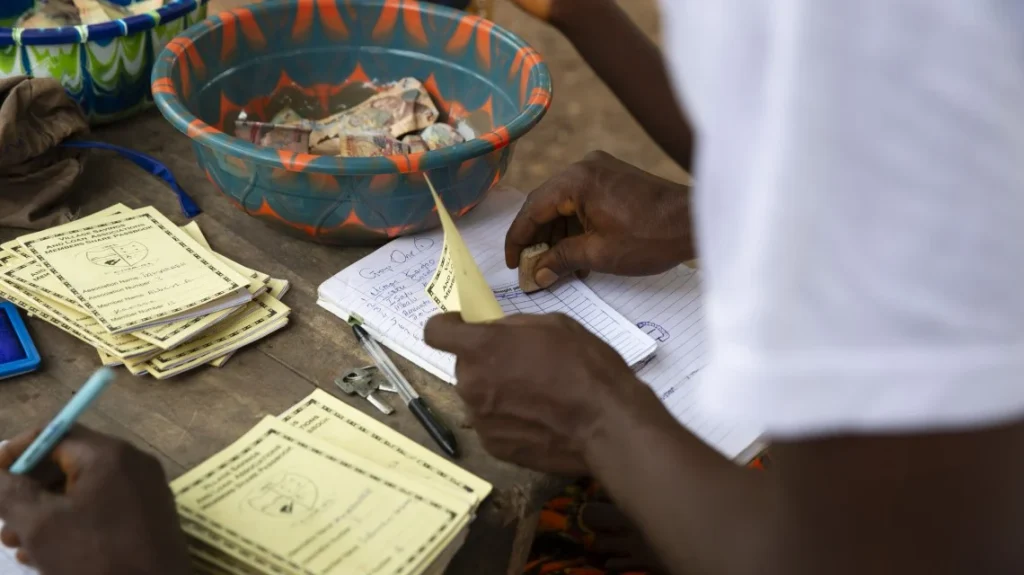
Source: Concern Worldwide
The same money, a different pathway
Ravaka worked with 378 farmers across 12 villages in south-eastern Madagascar in a behavioural decision-making game. She paired the findings with data from a parallel cluster-randomised controlled trial (RCT). In the game, farmers made agricultural and financial decisions under different transfer arrangements.
In the individual cash transfer, the farmer receives the money directly and decides how to use it. With a VSLA-mediated transfer, the money enters a collective financial system which is governed by rules. The rules include things such as farmers must join the group, save, purchase shares, and borrow through the group, with loans repaid with interest.
As Ravaka explained in our interview, the difference between individual cash transfer and VSLA matters because the financial pathway itself changes the decisions available to farmers.
So what changed?
Relative to baseline, individual cash transfers increased adoption of climate-smart agriculture by 2.8 percentage points. By contrast, VSLA-mediated transfers did not produce a statistically significant increase in adoption across all participants.
At first, the result seems like a clear verdict: give farmers cash directly, and climate-smart adoption will increase. But Ravaka and her team looked deeper. Among farmers who actively borrowed through the VSLA, adoption increased by 4.29 percentage points. By comparison, among borrowers under individual transfers, adoption increased by 1.50 percentage points. This distinction changes the discussion to: Through which pathway, and for whom, does financial support change behaviour?
“The VSLA comes with both cash and a set of institutional rules, incentives and choices,” she explained.
The financial behaviour tells a second story
The two transfer mechanisms also pushed farmers’ financial behaviour in different directions. When farmers received cash transfers, their need to borrow through the VSLA declined by 2.89 points. By contrast, VSLA transfers increased borrowing intensity by 2.51 points.
Consequently, the outcomes diverged. Individual transfers directly relaxed the liquidity constraints, generating higher overall earnings, but with more dispersion between participants. VSLA transfers provided a borrowing pathway, generating smaller gains but more stable and more equal earning outcomes.
Development interventions are often discussed in terms of inputs: How much money was transferred? How many farmers receive it? Ravaka’s findings suggest that these questions may not be enough. The same financial resources can behave differently depending on the architecture around them.
In summary, Ravaka argues that financial interventions should not be judged only by the amount transferred or by whether adoption increased on average. Designers also need to ask what behaviours the delivery mechanism creates. Does it maximise farmers’ autonomy, or do the gains spread more evenly? Ravaka concludes that “there is no single better transfer scheme.” If the priority is a broad, immediate investment response, direct cash transfer to individuals might be the best option. However, if the priority is collective finance and less dispersed outcomes, VSLA-mediated liquidity might be the best channel. The way liquidity reaches farmers shapes who and how it is used and the outcomes it produces.