Water-Energy-Food Nexus for a Sustainable Future in Africa
Like many countries, food waste is a major challenge in Africa. The question is how to reduce food waste and make better use of it. Charachimwe’s study explored the utilization of agri-food by products within the water-energy-food (WEF) nexus through a systemic review.
Reason R. Charachimwe is a lecturer at the Faculty of Agronomy and Forestry Engineering, Eduardo Mondlane University in Mozambique and at the Department of Agriculture Management at Zimbabwe Open University in Zimbabwe.
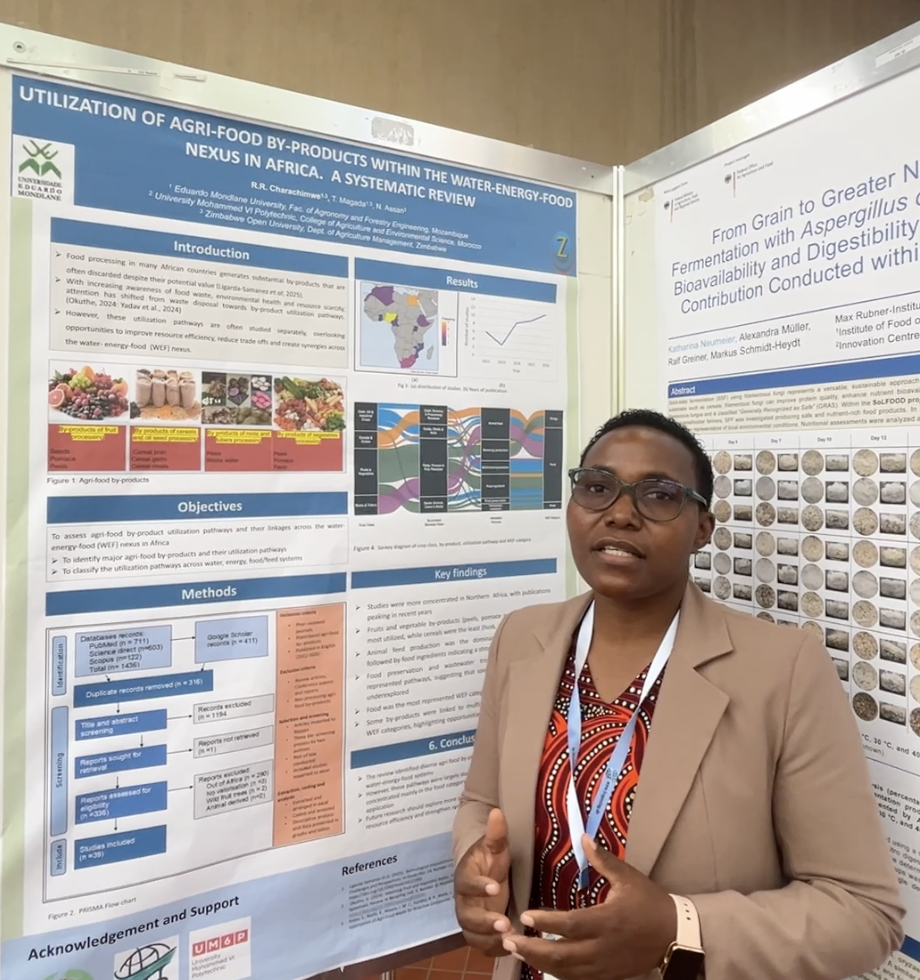
The objectives of the study were to identify major agri-food by-products and their utilization pathways. It also aimed to classify these utilization pathways across the water, energy and food systems. While the challenge of tackling food waste is widespread, there is also increasing awareness of food waste, environmental health, and resource scarcity. As a result, attention is shifting from waste disposal towards establishing viable utilization pathways for these by-products. The challenge is that these utilization pathways are often studied in isolation rather than through a holistic approach that considers opportunities to create synergies across the water-energy-food (WEF) nexus.
What is the Water-Energy-Food nexus in sustainability?
The Food and Agriculture Organization of the United Nations describes that it is about “understanding and managing often competing demands while ensuring the integrity of water-energy-food-ecosystems”. Water, energy, and food systems are closely interlinked with ecosystems. This means that actions in one sector often have implications for the other sectors.
The main findings of the literature review on the WEF nexus reveal that:
1. Most studies were concentrated in North Africa.
2. Fruits and vegetable by-products such as peels, pomace and pulp, were the most utilized, while cereal by-products such as husk, shells and hulls, were the least utilized.
3. The most dominant utilization pathway was animal feed, followed by food ingredient. This implies that food was the most represented utilization pathway.
4. While food was the most represented pathway, some by-products were linked to multiple pathways, demonstrating opportunities to create synergies across the WEF nexus
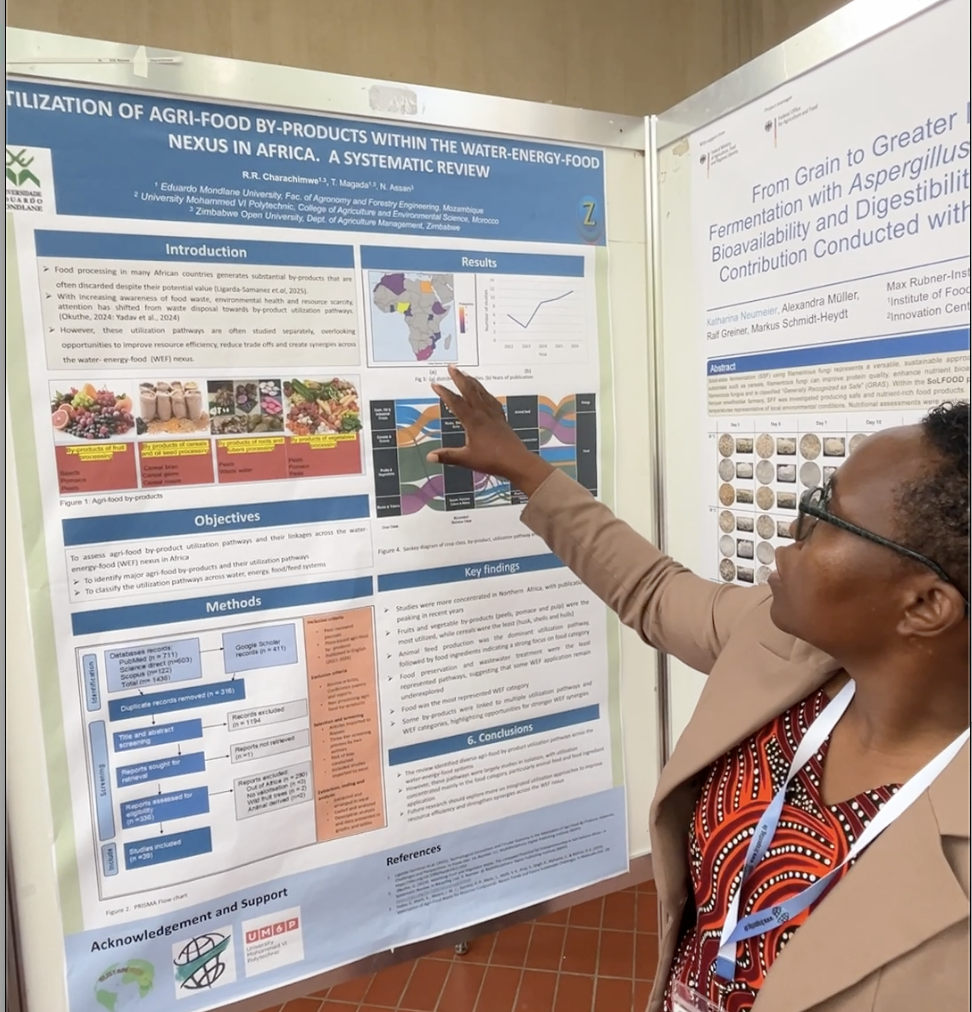
I had the opportunity to have a further conversation with her about her findings, and we discussed a question that we both found interesting: “Why is the energy sector the least involved and invested in the WEF nexus?“
The sun is almost never lacking, the land is vast, and the surrounding oceans have enormous potential to provide resources that could contribute to a sustainable future for Africa. There is no single answer to our question, but it is clear that our attention to the WEF nexus is more crucial than ever. Working across sectors and disciplines will be essential to building a climate resilient and sustainable future for Africa and beyond.