
They Knew. They Couldn’t Act
A 2026 Tropentag case study from Malawi found that 92% of smallholder farmers knew recommended practices, but only 14% were still using them. The problem was never knowledge.
Source: Intersnack Group
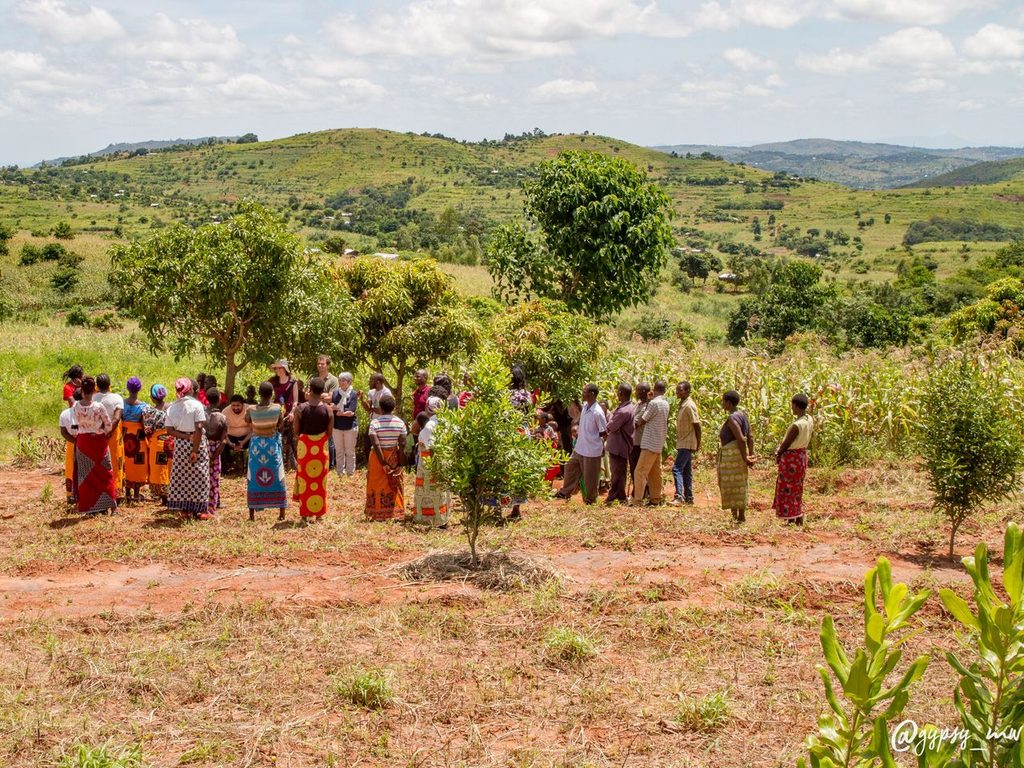
Ms Banda, a hypothetical small-scale farmer in rural Malawi, has attended every training an international NGO has organised in her village. She understands the pruning calendar and the pest schedule. After completing a six-month training, she received her certificate. But she is doing none of what she learned. When you visit her farm, nothing has changed. The cassava is still dying of blight, and the trees are unpruned. The experts conclude that she is not motivated or probably lazy. But Patrick Phiri, a PhD researcher at the Open University (UK), thinks there is more to the story.
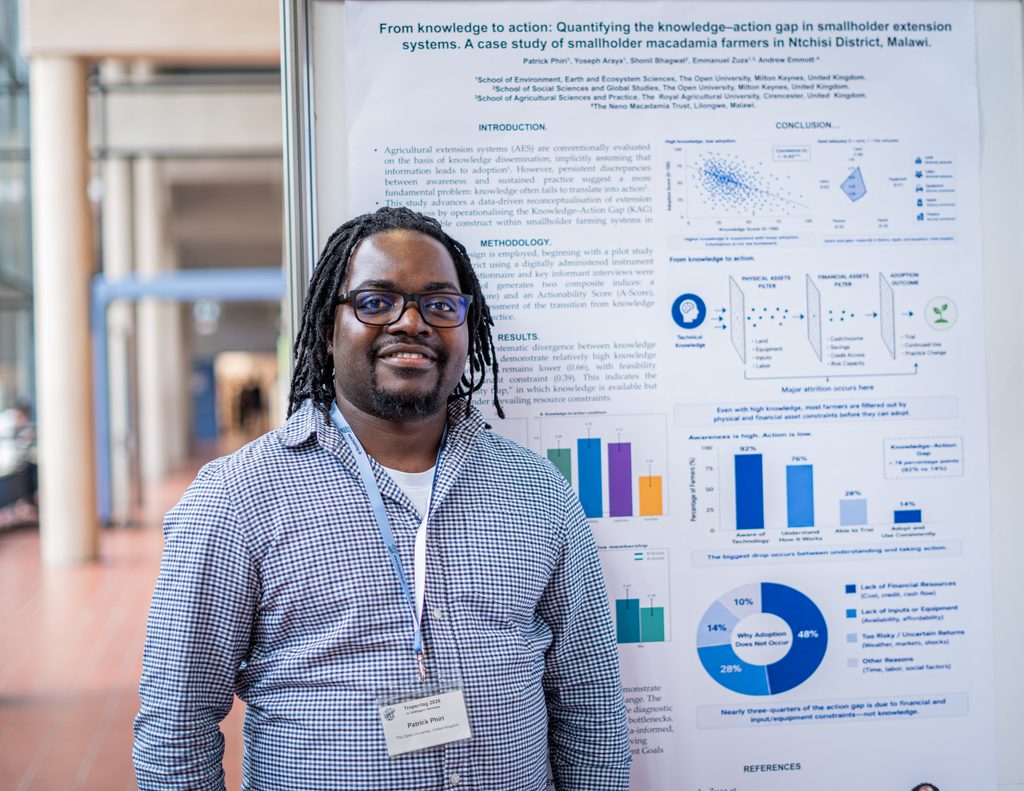
At Tropentag 2026, Phiri stood by his poster asking a simple question: “Why do so many extension projects quietly fail after the funding leaves?” His pilot study of 20 smallholder farmers in Ntchisi District, Malawi, found that farmers possess ample knowledge but lack the means to act on it. Phiri constructed two indices, a Knowledge Score (K-Score) and an Actionability Score (A-Score), to operationalise the knowledge-action gap. He reports that 92% of farmers are aware of existing technologies, but only 14% adopted and continuously use those technologies, creating a knowledge-action gap of 78%. Phiri is careful not to overstate his findings: “I cannot generalise the data,” he says, “but it gives us a pattern of how things are in real life in the communities.” Twenty farmers in one district is a signal, although it is not a representative sample of the country. “Three more districts are coming,” he adds.
Source: Adesoji Adeyemi-Adejolu
So what are the roadblocks?
According to Phiri, farmers listed practical constraints. For example, 48% of the farmers cited lack of capital or credit, 28% mentioned no access to equipment or inputs, and others worried about rainfall, uncertainty or market prices. Collectively, these factors create a “feasibility trap”, where well-intentioned advice, clearly communicated and understood by farmers, fails to be adopted. Phiri argued that we often evaluate a project by its process measures: Did the farmer attend the training? Was it delivered as planned? He clarifies: “Extension systems have been built on the assumption that information leads to adoption.” But his study challenges that linear model. As he put in our interview, “Knowing is not doing.”
This challenge is not limited to Malawi. A 2025 FAO study from Zambia described a similar pattern: “While farmers are increasingly aware of sustainable practices, adoption remains limited due to social, cultural, and behavioural barriers. This reinforces the argument that training alone is insufficient. Also, disaggregating the data from the pilot shows that female-headed households had lower actionability scores compared to their male counterparts. This might also be an indication that women farmers have less access to land, cash or machinery to take action on.
The final takeaway is that when projects end, farmers may simply lack the means to implement the new practices. What is needed is a holistic, structural change. What if extension programmes shifted from teaching to designing for action? That would mean pairing training with microcredit or linking farmers to input suppliers. As Tropentag 2026 wraps up, the question to carry forward is: What if the farmer already knows what to do, and the real problem is that the system has not made it possible to actually do it?
I strongly agree with this insightful article. Farmers are too often judged by whether they adopt recommended practices, without considering whether they have the resources and opportunities needed to act. Knowledge alone is not enough. Effective extension must go beyond training by connecting farmers to finance, inputs, equipment, markets and supportive institutions. The real measure of success should not be how many farmers were trained, but how many were genuinely enabled to turn knowledge into sustained action.