When the Forest Disappears: How Displacement Is Changing Batwa Food and Knowledge
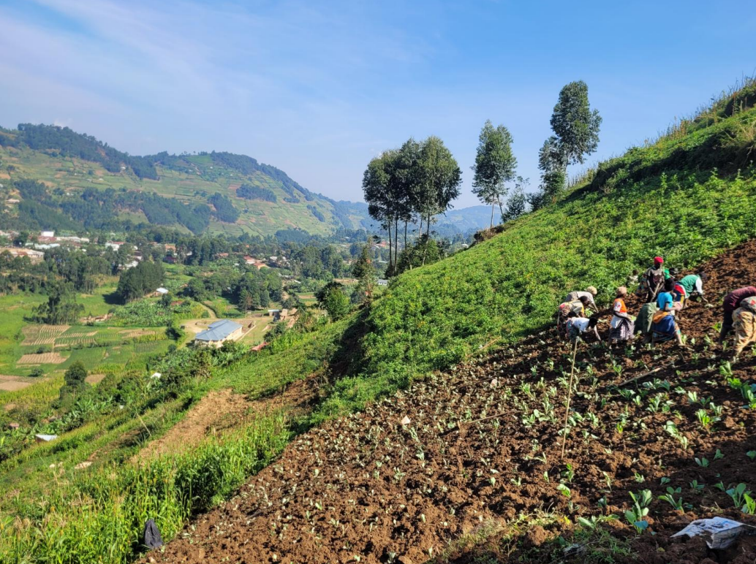
For the Batwa Indigenous communities of southwestern Uganda, the forest has traditionally and historically been much more than a place to live. It has been a source of food, medicine, culture, spirituality, and knowledge passed from one generation to the next. But when the creation of Bwindi Impenetrable National Park led to the forced eviction of Batwa communities from their traditional lands in the 1990s, access to this way of life was severely disrupted.
A study by Jeremy Brendan Gratton, Alex Ahimbisibwe and Jana Mazancova examines what happened after displacement, focusing on two closely connected questions: what happens to food security when people lose access to their traditional environment, and what happens to the knowledge built around that environment?
Losing Access to the Forest Means Losing More Than Food
The research, conducted in Uganda’s Kisoro and Rubanda districts, combined household surveys, interviews and participant observation. Among the 67 households surveyed, the findings reveal significant challenges.
Around 60% of households had poor or borderline Food Consumption Scores, while 75% reported depending on casual labour. At the same time, 93% did not legally own land. For communities traditionally dependent on forest resources, losing access to the forest can therefore mean losing an important source of food while also increasing dependence on income and purchased food. One young woman interviewed in the study explained that access to the forest could provide wild yams and other foods, while also allowing her to obtain different foods through relationships with neighbouring communities. The issue is not simply whether food exists. It is also whether people have meaningful access to the resources and knowledge that allow them to obtain it.
Perhaps one of the most striking findings concerns traditional ecological knowledge.
The study found a clear generational difference in the transmission of traditional food knowledge. While 58% of respondents aged 40 and above reported traditional knowledge transmission, this fell to 31% among those aged 20–39 and reached 0% among respondents under 20. This raises a difficult question: what happens when knowledge can no longer be practised? Traditional ecological knowledge is not simply information stored in someone’s memory. It is often learned through experience: knowing which plants are edible, when they can be harvested, how they can be prepared, and which resources have medicinal or cultural importance.
Without access to the environment where that knowledge is used, opportunities to pass it on can disappear with each generation. As one older Batwa woman put it, external institutions were pushing communities towards modern life while many people lacked the money needed to sustain that transition.
What the Numbers Say About the Future
The research also found a strong perception that access to the forest could improve food security. 86% of men and 72% of women believed that greater forest access would improve their household food security. Self-reported access to sufficient food was relatively low, averaging 1.8 out of 5 among men and 1.3 among women. These findings show that food insecurity cannot necessarily be understood only through income or food purchases. For the Batwa, land, forests, food traditions and cultural knowledge are closely connected. The study concludes that conservation-driven displacement has disrupted traditional food systems and weakened connections between generations and their ecological knowledge. It also points towards a possible way forward: restoring meaningful access to land and forest resources could support both nutritional outcomes and cultural revitalisation. This does not mean rejecting modern life or conservation. Rather, it highlights the importance of considering Indigenous communities when conservation policies are designed and implemented.
And when access to the forest disappears, all three can be affected.