When the Bell Rang Again: Welcoming Tropentag 2026
The bell rang again after a year.
On the afternoon of 16 September 2026, after a year of silence, the bell rang out through the packed hall at the University of Göttingen, marking the beginning of Tropentag 2026.
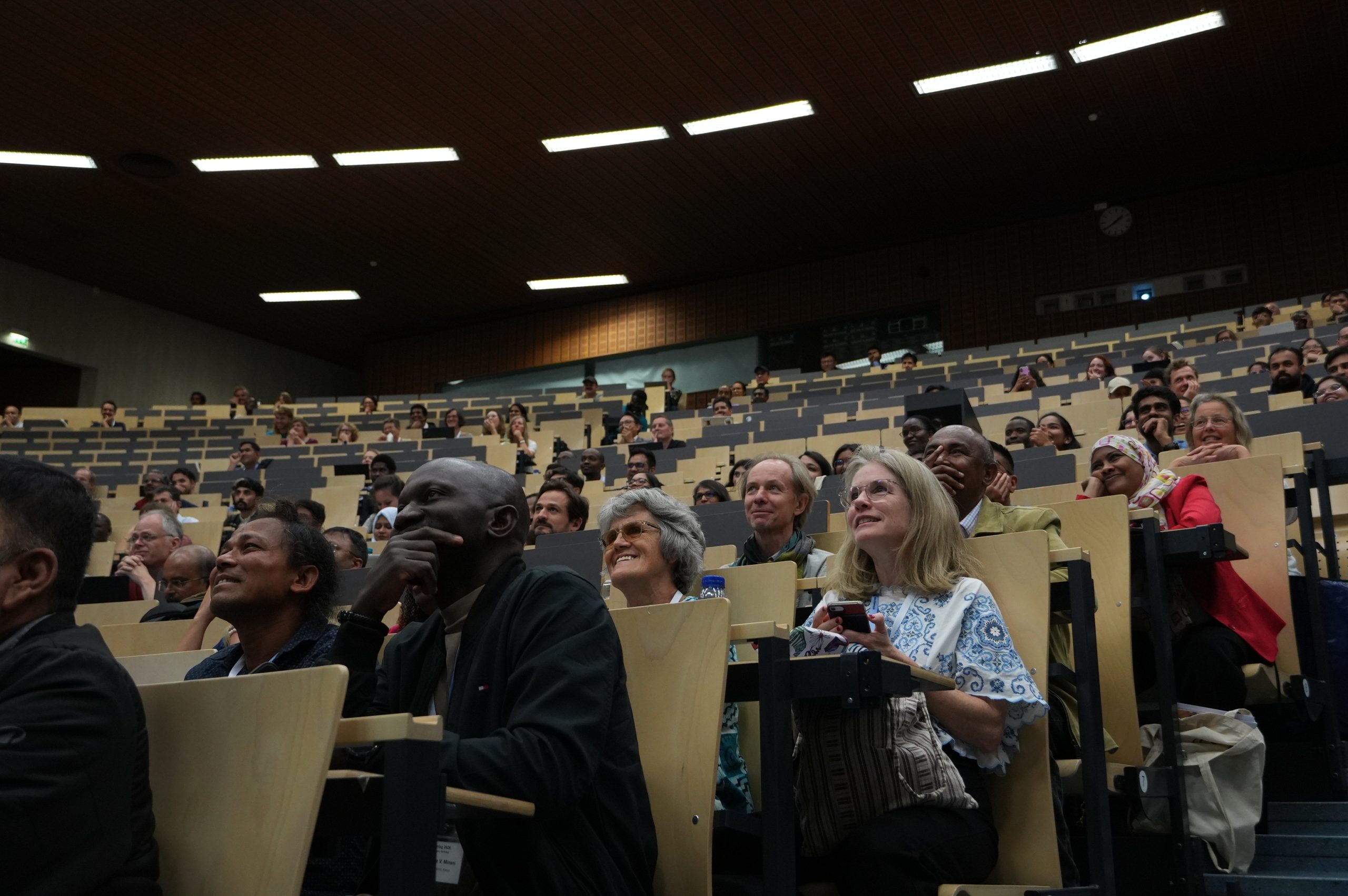
A light drizzle had just passed, leaving the paths to the Zentrales Hörsaalgebäude (ZHG) glistening. The sky was grey, the air cool and fresh—and the first participants were already arriving. Researchers, scientists, academics and students from around the world gathered, filling the lecture hall with anticipation and conversation.
It felt almost like yesterday that Tropentag 2025 brought the same energy to the University of Bonn. This year, the conference moves to Göttingen and Kassel, with the Universities of Göttingen and Kassel organising Tropentag 2026 as a hybrid event in cooperation with ATSAF e.V.
And then, the bell rang.
Tropentag 2026 was officially underway.
This year’s theme—“Towards multi-functional agro-ecosystems promoting climate-resilient futures”—sets the stage for three days of ideas, questions and conversations about the future of agriculture and food systems.
Where disciplines and generations meet
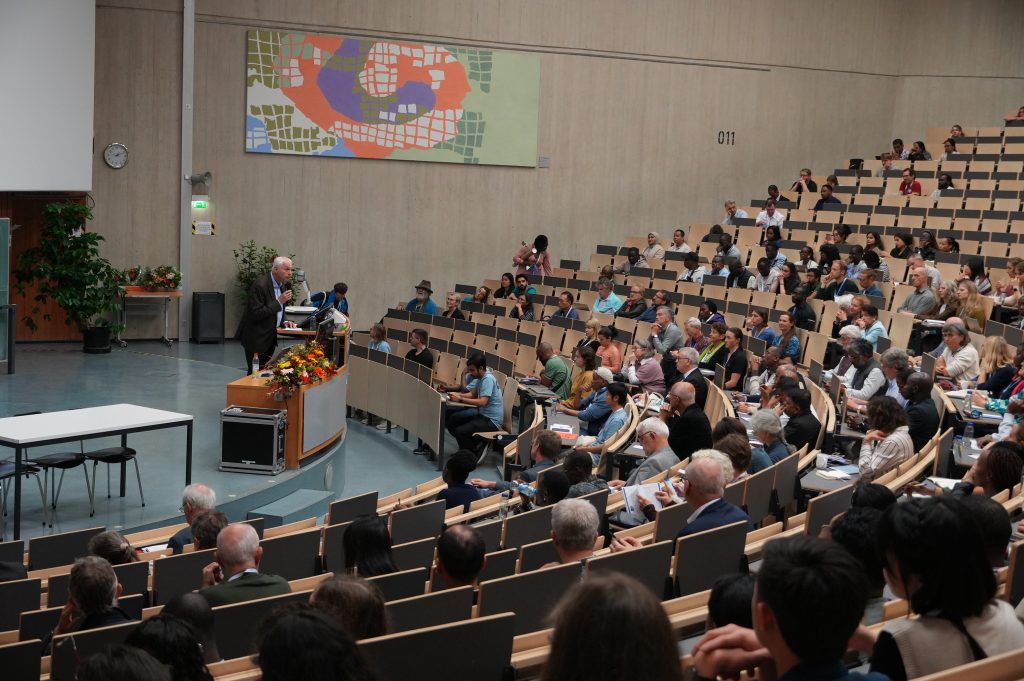
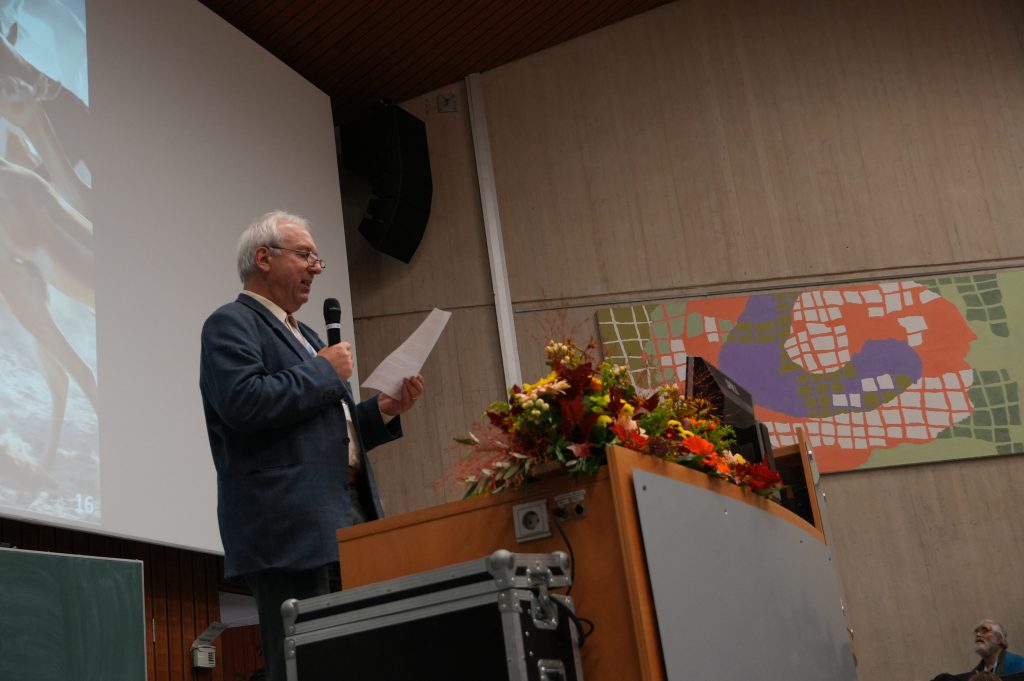
Prof. Dr. Bernhard Brümmer welcomes participants to Tropentag 2026. (Photo: Ajit Uddhao Masurkar)
The first welcome came from Prof. Dr. Bernhard Brümmer, Vice-President for Research and Sustainability at the University of Göttingen.
Welcoming participants “from across the street to across the continent”, he highlighted what makes Tropentag special: bringing people together across disciplines, generations and borders.
Agricultural and rural development challenges rarely fit neatly into one discipline. They require collaboration, support and, above all, connections.
“Tropentag is where the disciplines meet; generations of researchers meet…”
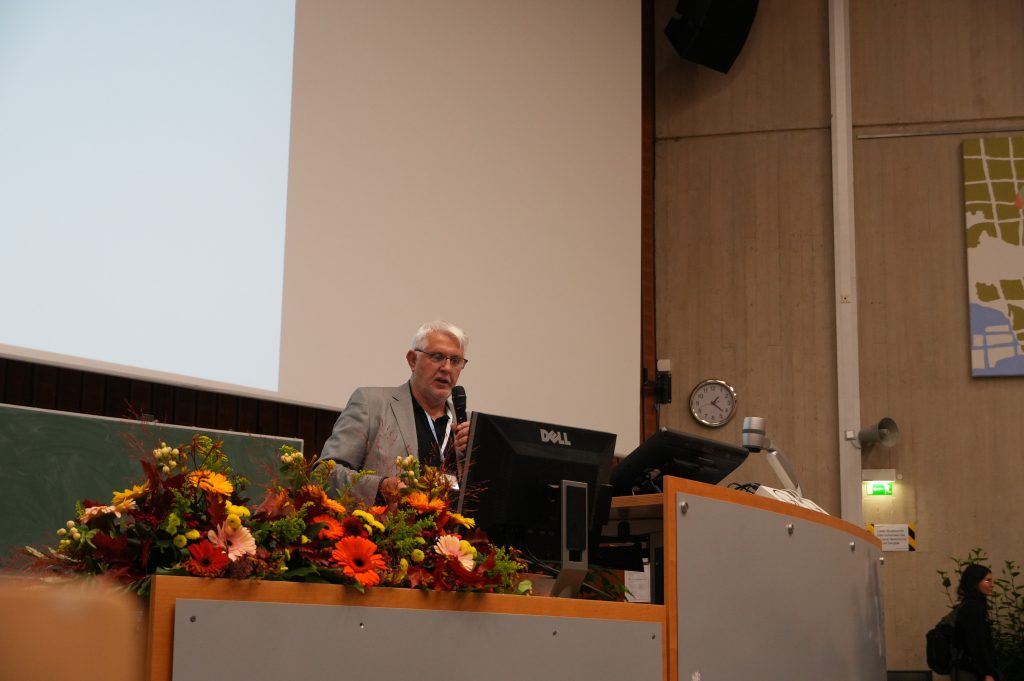
Prof. Dr. Reimund P. Rötter sets the scene for Tropentag 2026. (Photo: Ajit Uddhao Masurkar)
The microphone then passed to Prof. Dr. Reimund P. Rötter of the University of Göttingen’s Campus Centre of Biodiversity and Sustainable Land Use.
His question was simple: Why Tropentag?
His answer lies in the challenges facing agriculture today. Rising greenhouse gas emissions, a changing climate, biodiversity loss and increasingly complex environmental and socioeconomic shocks are all interconnected.
That is why, he emphasised, we need to think beyond individual crops, sectors or problems and towards multi-functional agro-ecosystems.
The conference brings this idea to life through six interconnected themes: resilient crop, livestock and agroforestry systems; climate change impacts, adaptation and mitigation; food systems, nutrition and livelihoods; markets, governance and policy innovation; soil, water and biodiversity; and technology, data and knowledge systems.
Different themes. Different disciplines. One shared question: How can our agricultural systems become more resilient for the future?
Beyond yield
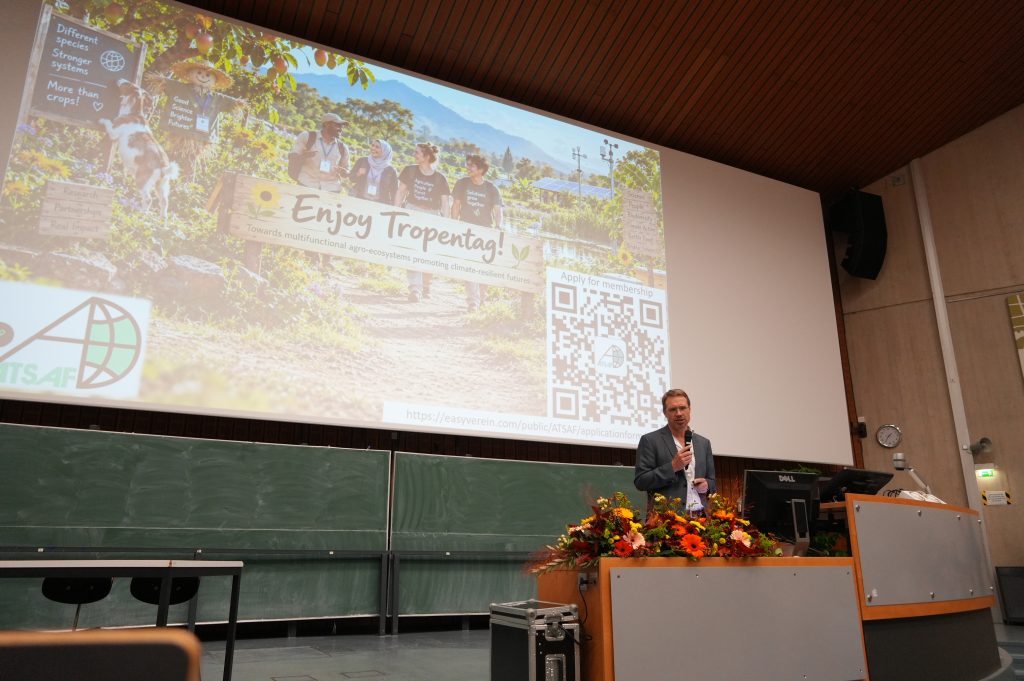
Prof. Dr. Andreas Buerkert welcomes participants to the opening of Tropentag 2026. (Photo: Ajit Uddhao Masurkar)
Next came Prof. Dr. Andreas Buerkert from the University of Kassel’s Centre for International Rural Development, welcoming both those in the room and those joining online.
The numbers alone show the scale of this year’s gathering: around 727 participants in person and another 196 online, from 74 countries, with 556 oral and poster presentations.
But Tropentag is about more than numbers.
Prof. Buerkert reminded participants that the future of agriculture cannot be reduced to one goal: producing more.Increasing food production must go hand in hand with preserving biodiversity and natural resources. Agriculture is not separate from its environment—it is part of a living system.
With that message, he wished everyone three days of intellectually stimulating and vibrant exchange.
And there was certainly plenty to exchange.
More than a conference
Prof. Dr. Eike Luedeling shares his reflections on Tropentag and ATSAF. (Photo: Ajit Uddhao Masurkar)
The final welcome came from Prof. Dr. Eike Luedeling, Chair of ATSAF and Head of the Department of Horticultural Sciences at the University of Bonn.
He introduced ATSAF—the Council for Tropical and Subtropical Agricultural Research—one of the organisations behind Tropentag.
But his message was less about an organisation and more about what happens when people connect.
Drawing on his own journey, from joining Tropentag as a young researcher to becoming part of its organising team, Prof. Luedeling reflected on how the conference can stay with researchers throughout their careers.
Friendships are made. Networks grow. Collaborations begin. And sometimes, those connections develop into projects that reach far beyond the conference room and contribute to real change in communities around the world.
That, he explained, is at the heart of ATSAF:
Connecting people and institutions.
For development-related research, those connections can be especially powerful. An idea may begin with one researcher, but collaboration can turn that idea into something much bigger.
And so, the bell rings again
A year has passed since the last Tropentag.
Now the halls of the University of Göttingen are alive again—with scientific presentations, animated conversations, new questions, familiar faces and first introductions.
For the next three days, researchers and students from across disciplines, generations and continents will come together to share what they know, challenge what they think they know, and perhaps discover something entirely new.
The bell has rung.
Tropentag 2026 has begun—and the real exchange is only getting started.