Five Posters That Stood Out at Tropentag 2026
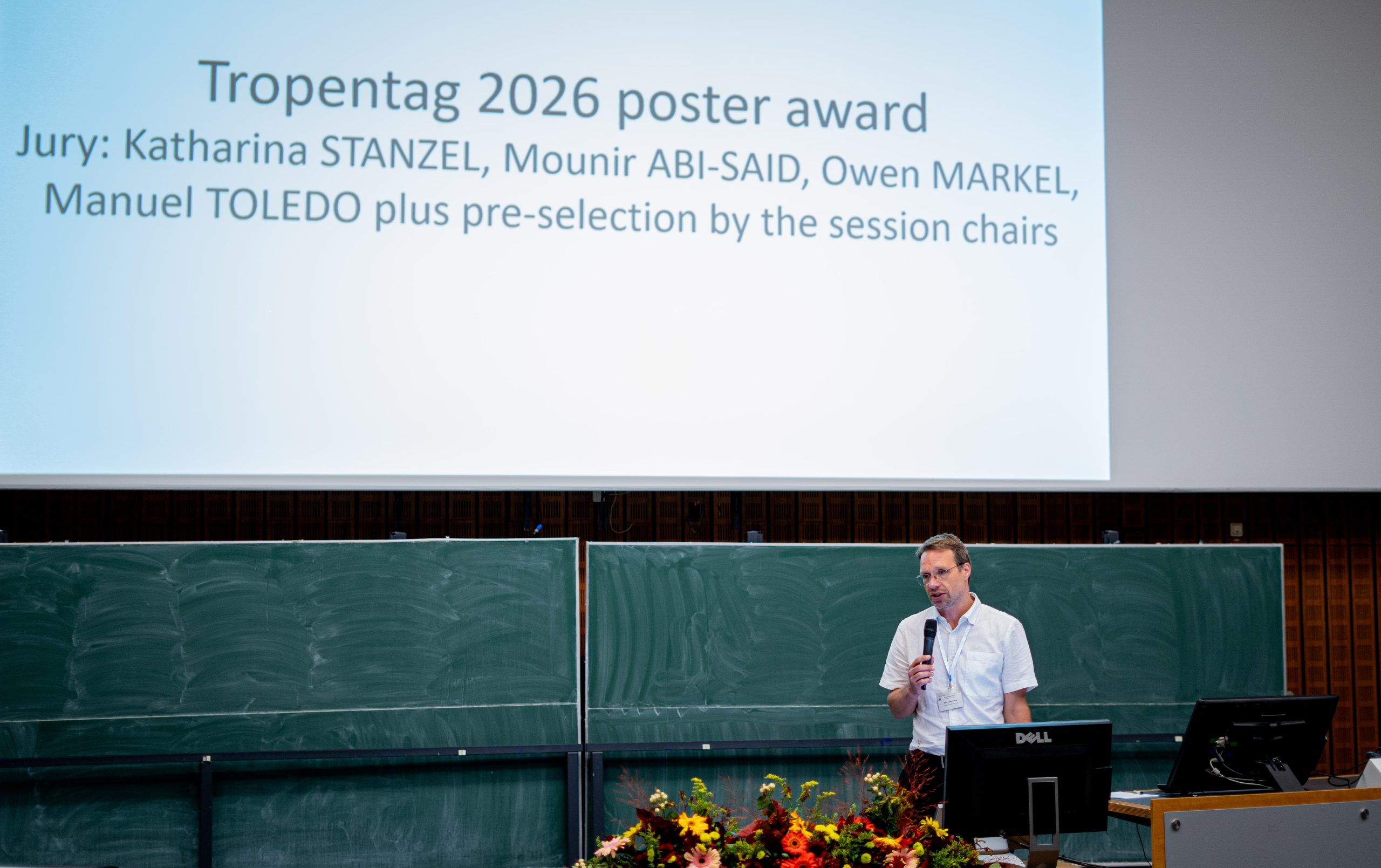
Five researchers received Poster Presentation Awards at Tropentag 2026, celebrating posters that stood out for their general layout, visualisations, use of space, colour scheme, balance between text and images, and creativity.
The winning posters covered a wide range of topics, from rangeland governance and changing food environments to biogas, rural livelihoods and climate adaptation.
Tresia Ipangelwa received an award for her poster on rangeland governance, grazing access and livestock management in semi-arid Namibia. Her study looks at how policies, customary systems and local institutions shape access to grazing land, and how challenges such as fencing, land grabbing and overlapping responsibilities affect livestock mobility and grazing management.
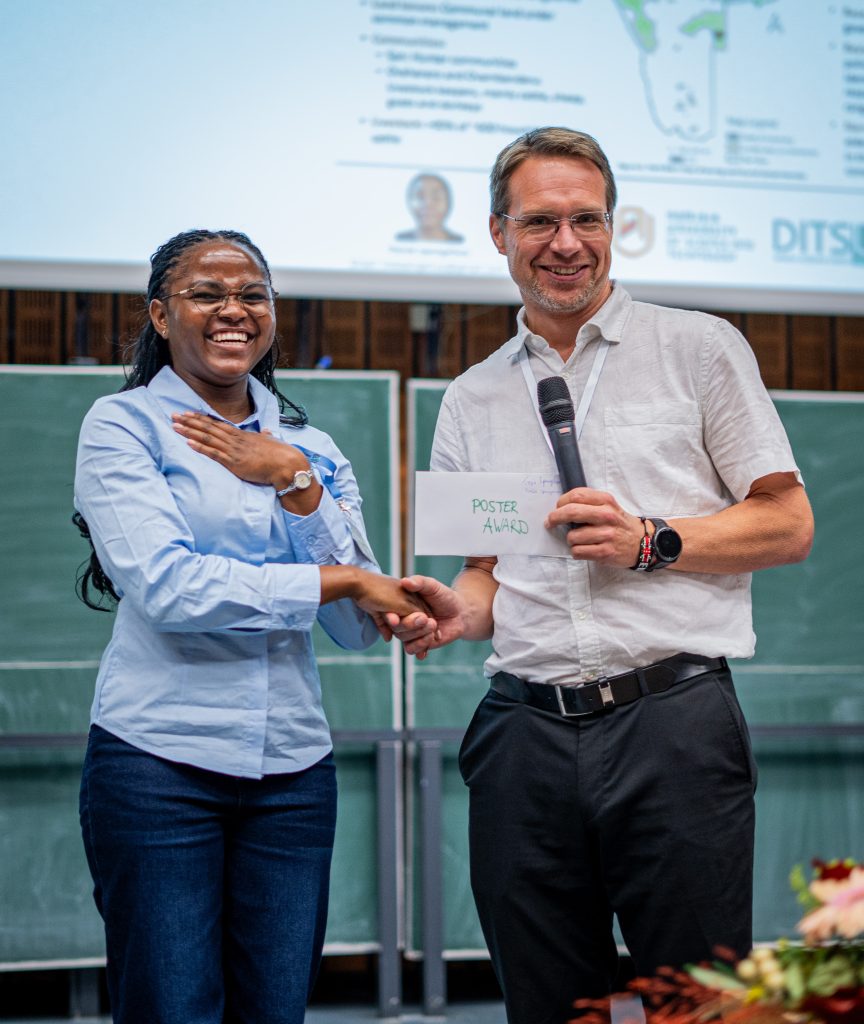
Tresia Ipangelwa receiving her Poster Presentation Award at Tropentag 2026. (Photo: Adesoji Adeyemi-Adejolu)
Franziska Lang was recognised for her research on ultra-processed food consumption in Cambodia. Based on data from more than 1,000 caregivers, the study explores children’s diets and how caregiver education, nutrition information and perceptions of packaged foods relate to food choices in changing food environments.
Sakiratou Karimou M received an award for her comparative study of biogas profitability and adoption in Benin and Burkina Faso. The research shows how the benefits of biogas differ between contexts, with factors such as firewood prices, the use of organic fertiliser, and farmers’ production systems influencing its economic value and adoption.
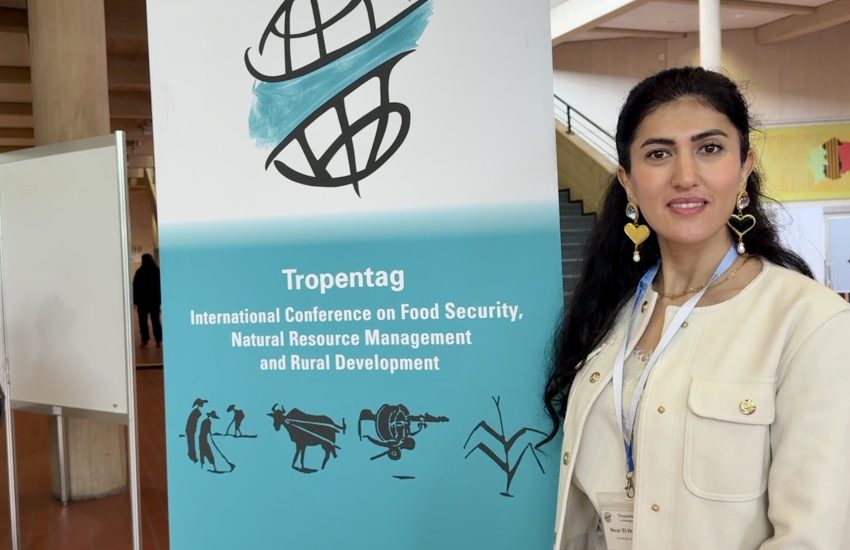
Nour El Houda Amhez presented research on the socio-economic conditions and livelihood systems of settled Bedouin households in Lebanon. The study highlights regional differences in household characteristics, education, employment, and agricultural activities, while also showing the financial pressures faced by many households, including low incomes and high levels of debt.
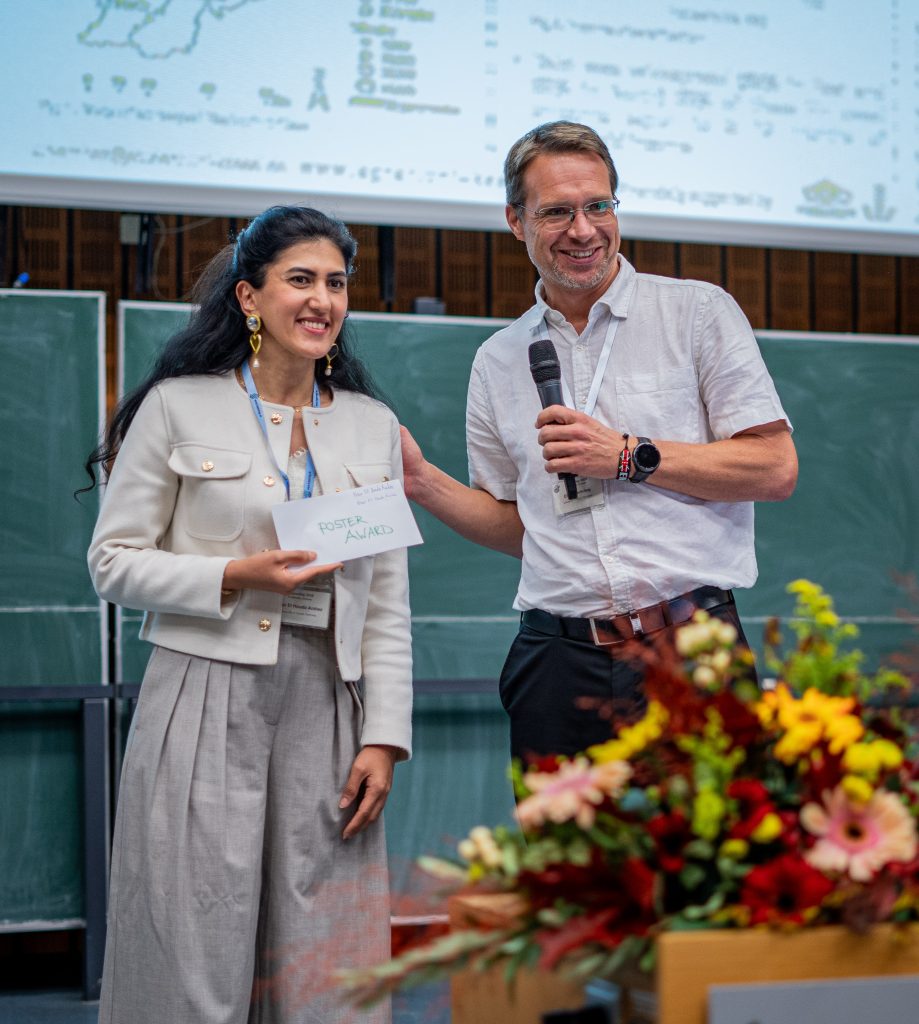
Nour El Houda Amhez receiving her Poster Presentation Award at Tropentag 2026. (Photo: Adesoji Adeyemi-Adejolu)
Alina Haus was recognised for her research on supplementary feeding of cashmere goats in Mongolia. Her study examines how herders prepare for harsh winter conditions and how access to hay, financial resources, markets and collaboration can influence their ability to cope with winter disasters known as dzuds.
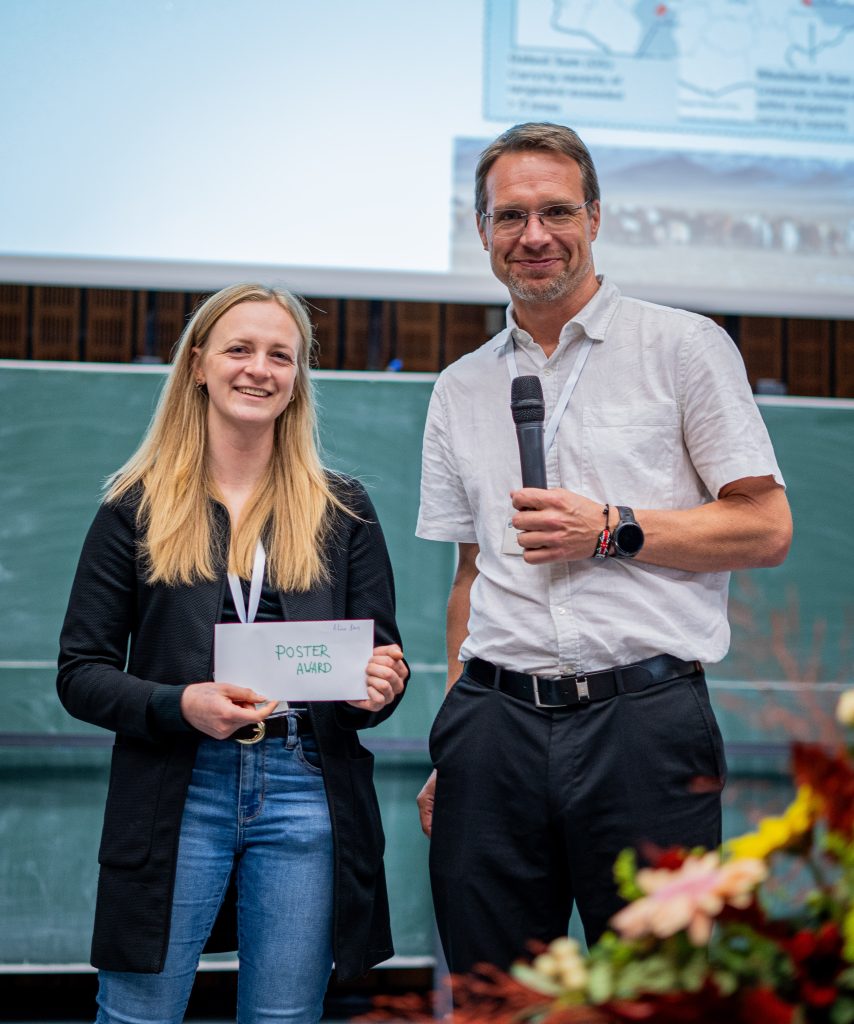
Alina Haus receiving her Poster Presentation Award at Tropentag 2026. (Photo: Adesoji Adeyemi-Adejolu)
Together, the five award-winning posters reflected the breadth of research presented at Tropentag 2026. They also showed how thoughtful visual design can help turn complex research into clear and engaging stories— giving conference visitors another way to discover, understand, and connect with new research.