“We need to meet future food demand while avoiding cropland expansion”: João Vasco Silva on yield gaps and food security
João Vasco Silva, Junior Professor at the University of Hohenheim, uses agronomy and data science to understand why many farmers in sub-Saharan Africa harvest far less than their crops could yield. At Tropentag, he spoke with Student Reporters.
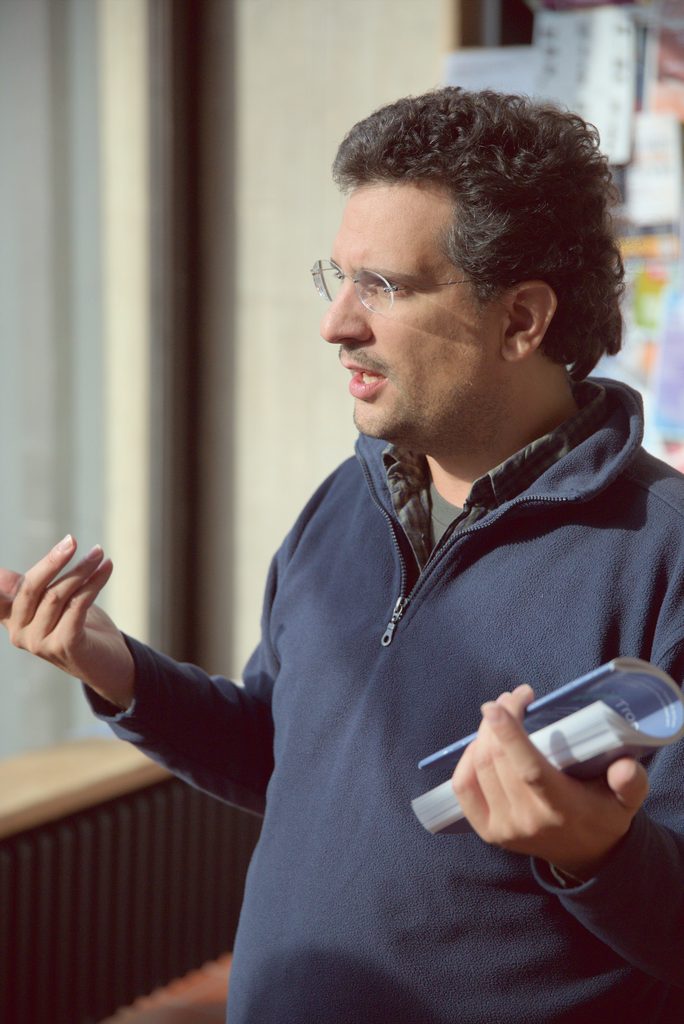
João Vasco Silva, Junior Professor at the University of Hohenheim, at Tropentag. Photo: Julius Nickl
Halfway through our conversation, João Vasco Silva stops talking about crop models and starts talking about the food industry. Value chains of commodities like oil palm, coffee or cocoa “mobilise billions of euros and are important drivers of change in tropical regions”, he says, and bringing those actors to the table with researchers, practitioners governments matters if research is to make a difference. The reason is simple: “Sustainable crop production cannot afford continued cropland expansion.”
Silva has spent years measuring the difference between what crops canpotentially yield and what farmers actually harvest. For him, understanding this yield gap is central to feeding a growing population without clearing more land. But evidence only makes a difference if it reaches the people who shape agriculture: farmers, governments, companies and those who decide where investments go.
Feeding the world through closing yield gaps
For readers new to this: what are yield gaps?
First you need the concept of yield potential: the maximum yield you can get in a given place with optimal agronomic management. It’s biophysical. You need radiation, temperature, a sowing date and a variety, and you can calculate it anywhere on the planet. But there are many good reasons why farmers often don’t reach it – think of economics, soil constraints or risks of environmental problems. The yield gap is no more than the difference between potential and actual yields. In most cases it’s explained by suboptimal crop management, often driven by other factors.
Is closing the yield gap in Europe the same as in Africa or tropical Asia?
The principles are the same. But look at farmers’ fields. In much of Europe, farmers reach around 80% of yield potential. Most smallholders in Africa reach around 20%. Understanding these differences is where it gets interesting because it brings us to farmers’ fields and forces us to dive in the context where crop production takes place.
If yield potential is a kind of ceiling, what does that mean for farmers who are close to it, and for those who are far below it?
Where farmers are already close to the ceiling, there are two ways to go further: raise the ceiling itself, or invest in closing the small gap that remains through fine-tuning crop management. Where farmers are still far below it, it makes more sense to look for stepwise yield improvements, and to learn which practices make the biggest difference in the short-term.
Does that mean farmers everywhere should use more fertiliser to achieve better yields?
No, it depends on where they start. In much of Africa, farmers often use way less than required to harvest a decent crop, and as a result yields remain low year after year. Making better use of what is locally available helps, but this is often not enough and external inputs are needed to break low productivity cycles. If you start from already very high input levels, as in parts of Europe or China, then yes, it is probably desirable to explore options to reduce inputs without compromising yields.
So closing the yield gap isn’t always the point?
From a farmer’s perspective, not necessarily. On favorable environments with large farms, yield potential probably drives profitability. But consider a household with more than four people to feed cultivating less than half a hectare of land, growing a single rainfed maize crop per year under erratic rainfall. This is a perfect storm for crop production and it is probably no surprise that such conditions may in fact weaken, rather than strengthen, the incentives to intensify agriculture.
And then there’s economics. Gross margins for many technologies don’t always add up on smallholder farms. Economically optimal yields are often below biophysical yield potentials, and investments in technologies should be attuned to that in my view. Food security is important, but we should also look for synergies where and how it can be met profitably at the farm level.
Your work points at closing the gap while providing ecosystem services and using fewer inputs.
I think it’s a good approach, but it cannot stop there. If you’re going to narrow your yield gap, how much will it cost you? If you implement those ecological practices, how much will they cost you and when can you expect to reap the benefits? And how much labor do you need… Defining realistic options for intensification are not straight-forward and should answer some of these questions besides showing positive yield responses alone.
Why it still matters: stopping land expansion
Then why keep working on yield gaps?
Because this story is and will remain critical for global food security. One of the big problems in tropical agriculture today is land expansion: soybean in Latin America, oil palm in Southeast Asia, and practically all crops in Africa, including staples like maize and rice to name a few examples. Cropland expansion has to stop, and arguably the most plausible way to meet future food demand on current land is through sustainable intensification.
You said the potential of yield gaps as a solution has sometimes been overestimated. Can you develop that?
We need to get the terminology right. Yield potential on its own is an important concept, but probably not very helpful to advise smallholders whose productivity levels are very far from it. In high-yielding regions, on the other hand, a focus on improving input use efficiency is important beyond increasing crop yields. Yield gaps should therefore be understood in the context where farmers operate and in relation to profitability and environmental sustainability.
Some critics dismiss yield gaps as a productivist approach. Yet in some regions, increasing yields really matters for food security.
I don’t like it when people dismiss it. If you estimate yield potential for every field in the world, you know how much food the planet can produce on existing cropland. You can’t go beyond that, and it is important to monitor this, for instance in the context of climate change. What we shouldn’t do is to use this potential to inform policies that push for self-sufficiency at all costs. Some countries tried this in the past, which pushed crops to marginal areas and led to resource degradation. But on prime agricultural land, it is important to achieve high-yields and use resources efficiently. If it doesn’t happen there, it will likely come from somewhere else as food demand keeps growing…
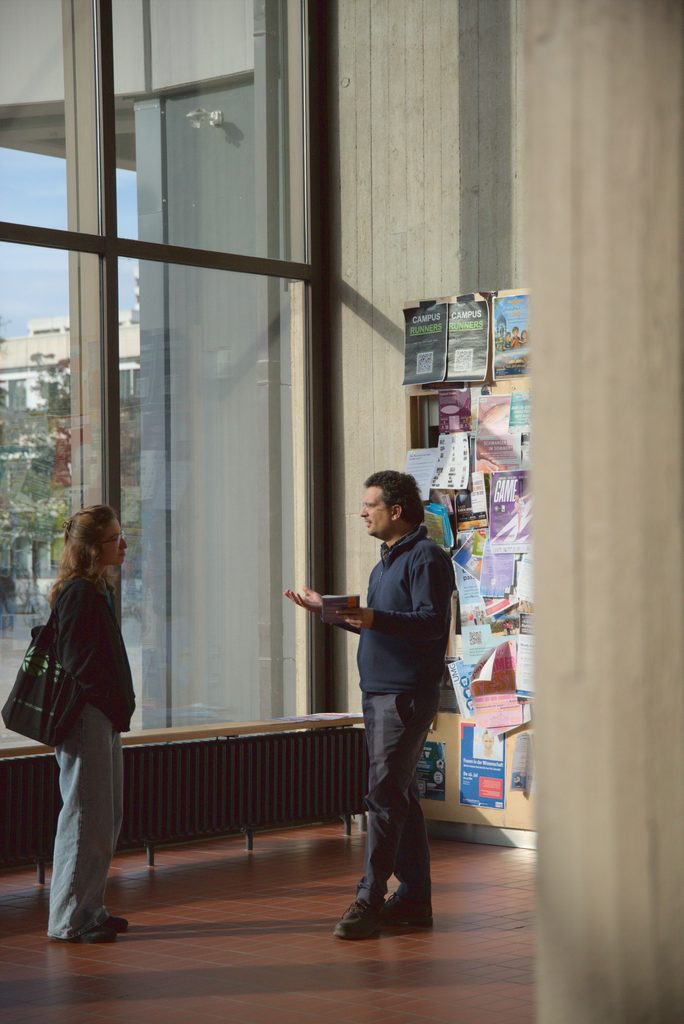
With Africa’s population projected to nearly double by 2050, Silva argues, the case for producing more food on existing land is not going away. Photo: Julius Nickl
The challenges ahead
Is there still a case for producing more food?
There are analyses that take population growth and diet change to 2050, account for food waste and losses, and still show that crop production needs to increase to meet food demand. So there is still a case to increase production globally, which should happen through yield gap closure on current cropland and while minimising waste and other food system losses. This is particularly critical in Africa where population is projected to nearly double by 2050, where most people will live in cities, and probably have more demanding diets, and where yields remain well below targets for sustainble crop production in the long-run…
Go and talk to farmers!
How do you make sure you’re solving what farmers actually need?
If you want to know farmer’s problems, go and talk with them. That first impression, listening to what their problems are, is absolutely critical. There is no way around it. An alternative is to go and try farming yourself.
Of course there are other interests that can pull you away from that perspective. That’s where you need independence: to stand in the middle, listen to diverging perspectives and reflect about them. As academics we have that freedom, and I’m convinced we as agricultural scientists can generate evidence that is useful to decision-making at different levels.
Here we work a lot with countries in the Global South. Are we answering the questions they want answered, or the ones the Global North wants to analyse?
It’s a difficult question for me to assess. Looking around, I see many students from tropical regions who come here to present their work. To what extent their work is funded by, or biased towards, the Global North, where much of the funding comes from, I cannot really say. But if that’s happening, it’s something that should be changed.
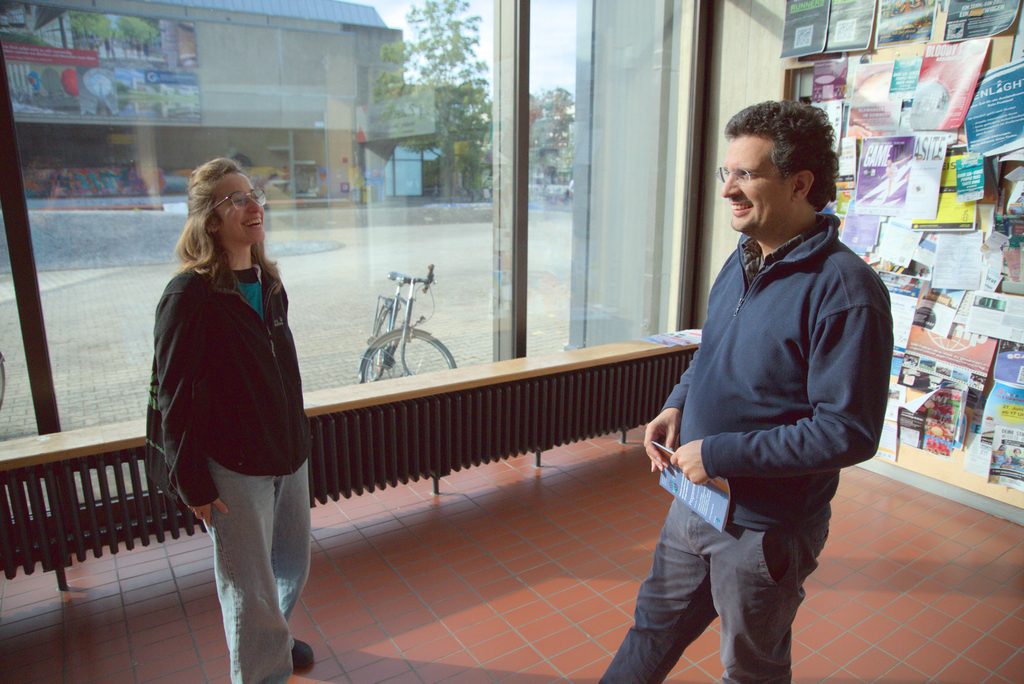
“If you want to know farmer’s problems, go and talk with them.” Photo: Julius Nickl
Is agricultural research too export-oriented, when it should focus more on domestic needs?
It depends where you are. In Latin America and parts of Southeast Asia, agriculture is strongly export-oriented. But in Africa the discourse is still about food security and self-sufficiency, and about reducing import dependency. Not just on grain, but on fertiliser also. That’s a very big issue these days of course, with the Strait of Hormuz closed and fertiliser exports to Africa being disrupted. But there are important commodities for export in Africa also, which remain an important source of income for many farmers.
Science as a stakeholder
It’s hard for scientists to leave the lab and engage with the people who make investment decisions.
But it’s necessary. We’re talking about development-oriented agricultural research, and it needs to have impact. That means understanding where investments are being made, and making sure our research speaks to them.
As a research community, we should be a stakeholder in these discussions and contribute to priority setting with the best knowledge we have, so that we can raise our hand and say: the evidence does not support this, or maybe try something else. It’s not my role to make policy. But I like to take part in these discussions and to help think through how best to make our knowledge useful.
Does evidence matter for funders and investors?
It should in my view. There is less and less justification for directing investments where they may not deliver the greatest impact, particularly where food security, natural resources, and farmers’ incomes are at stake. I believe science and investment decisions should be more closely integrated and where knowledge gaps remain, investors or practitioners should feel welcome to turn to scientists for support in addressing them.
You think the private sector is missing at conferences like Tropentag?
Absolutely. Value chains like oil palm, coffee or cocoa mobilise billions of euros and are important drivers of change in tropical regions. If we want our research to make a difference, we need to engage with a broad set of stakeholders: farmers, governments, development organisations and private sector alike and work together towards sustainable agriculture.
A message for young researchers
What do you think of what’s being presented here? What should young PhD students be thinking about?
It’s very nice to have a platform like this. We need a place to convene, take stock of what is happening in international agricultural research and engage students early on. It is also very important to cultivate an atmosphere of critical thinking, to reflect on what the community is doing and to debate contested issues that influence food production and natural resource management in tropical regions.
But that assumes we all share the same goals. Maybe even here we don’t.
That’s good. Make that explicit and let’s look at the evidence. That’s where the discussion should go.
What should young researchers take away?
In the context of soil health, it’s clear that soil amendments will result in yield responses in most cases. But we often talk about amendments in tonnes of input per hectare. That creates logistical problems for farmers, assuming the inputs are available in the required amounts in the first place. I think it would be helpful to complement the disciplinary input–output view with other disciplines and metrics, particularly profitability and labour productivity, to better understand how feasible different options are in practice.
Even more important: have a vision. Why are you doing this, and is it fun? How does your research fit into the bigger picture of land expansion and the commodities driving it, and of feeding the world sustainably by 2050? I recognise that interdisciplinarity and targeting can be a bit advanced at the start of one’s career. But we need to be critical about the research we do, and why we do it, because vested interests and trade-offs are everywhere.
Have you experienced conflict between evidence and consensus? Some agroecologists strongly oppose the yield gap approach, while others have evidence pointing elsewhere.
Many times. That’s why in science we need people with contrasting views. But we also need very rigorous research, and a space to exchange views and analyse evidence together. When it comes to agronomy, the devil is often in the details and we need to avoid simplistic generalizations or labelings and instead focus on scrutinizing each other’s work in a constructive way.
This interview was carried out by Student Reporter Sofía De León Guedes.